ABSI Formula Calculator
- Last formula update:
For population comparison only; this result is not a diagnosis.
Decimal & Rounding Policy
- Convert height and waist to meters and weight to kilograms before calculating.
- Calculate BMI, ABSI, and the z-score without rounding intermediate results.
- Use the published age- and sex-specific reference values to five decimal places.
- Display ABSI and z-scores with up to six decimal places and no forced trailing zeros.
- Show reverse-solved measurements with up to 12 significant digits.
- Apply adult reference bands to the unrounded z-score, not its displayed value.
Valid range
- Sex: select female or male for the corresponding reference table.
- Age: enter a whole number from 2 to 85 years.
- Height: enter a value equivalent to 0.4–3.5 m in the selected unit.
- Weight: enter a value equivalent to 2–1,000 kg in the selected unit.
- Waist circumference: enter a value equivalent to 0.2–5 m in the selected unit.
- Editable ABSI: enter a value greater than zero and no greater than 1.
- Editable z-score: enter a finite value from −30 to +30.
- Adult reference bands require age 18 or older; these limits are software guards, not clinical cutoffs.

Brinelle Lumquell
Reviewers:
Cavarine Pexmont
Yeldric Vossbourne
Check our editorial policy
September 28, 2026
1.0.0
Initial calculator and formula release.
Our engineers are here to help you get it right.
What Does the ABSI Calculator Tell You About Your Waist?
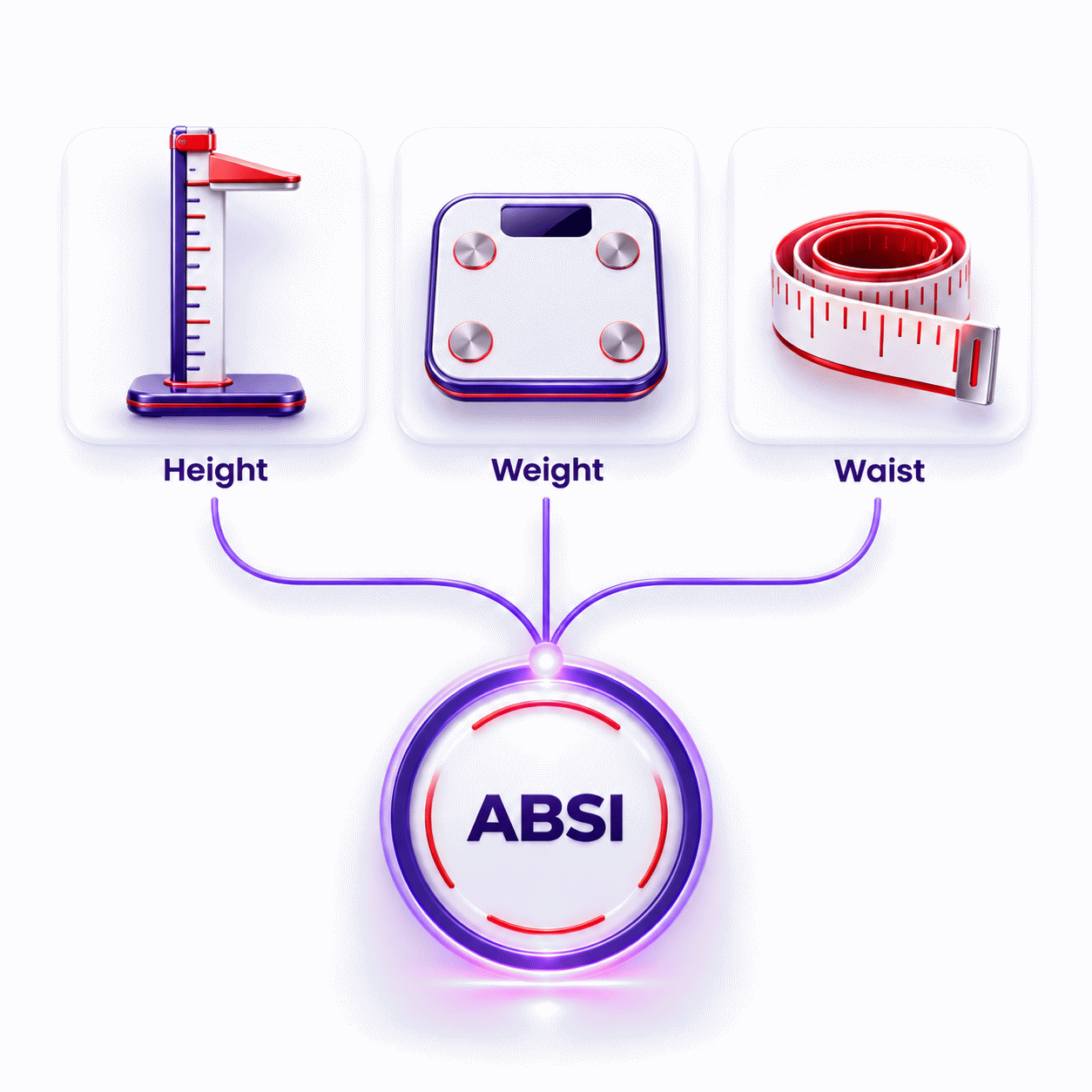
The ABSI Calculator shows how large your waist is for your body size. ABSI means A Body Shape Index. It uses waist, height, and weight to give a shape score. Age and sex select a group mean and spread for its z score.
- Enter your age, the female or male group, height, weight, and waist.
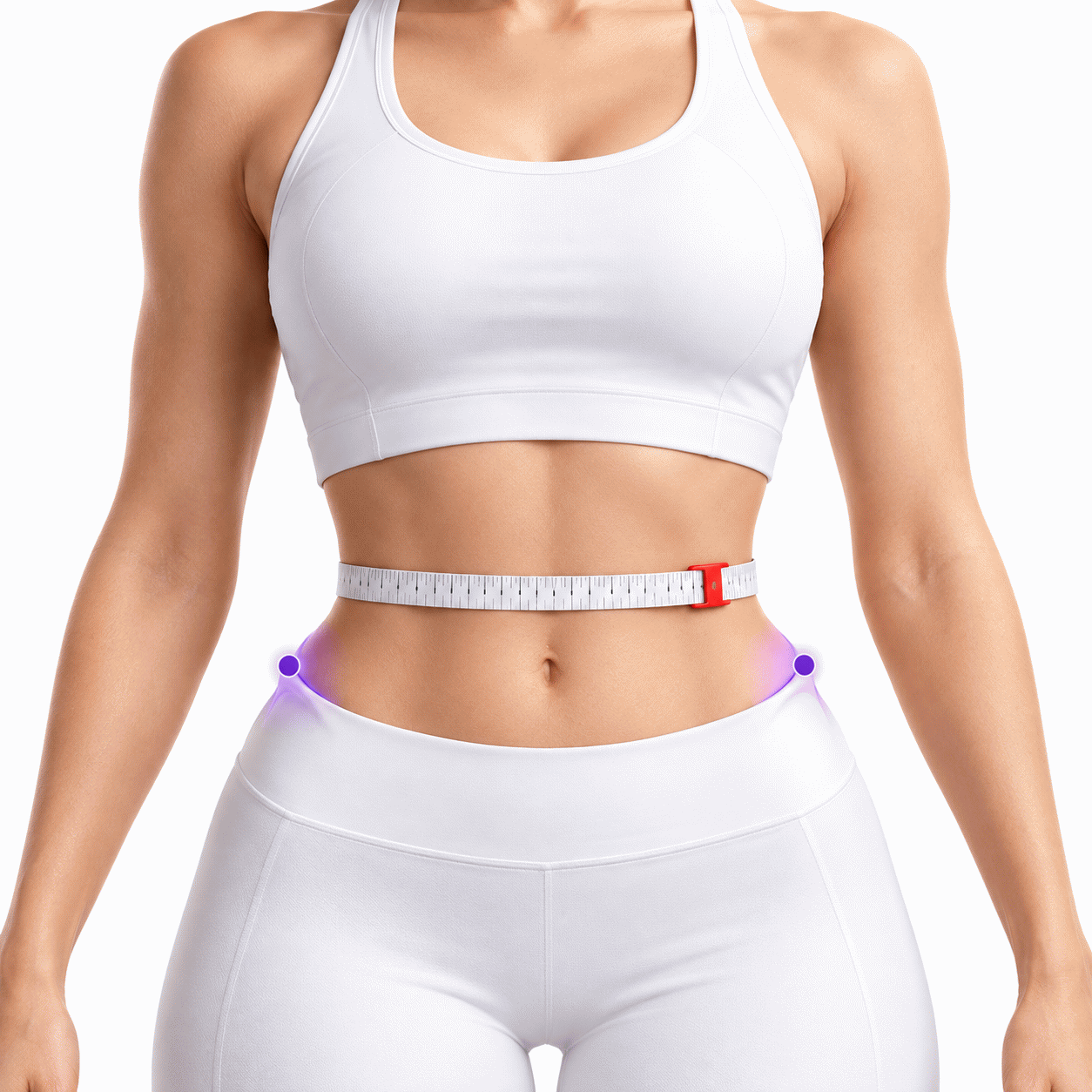
- Place the tape just above your hip bone. Keep it level. Read it after a normal breath out.
- Raw ABSI shows waist size for your body size. It cannot test for disease or tell body fat.
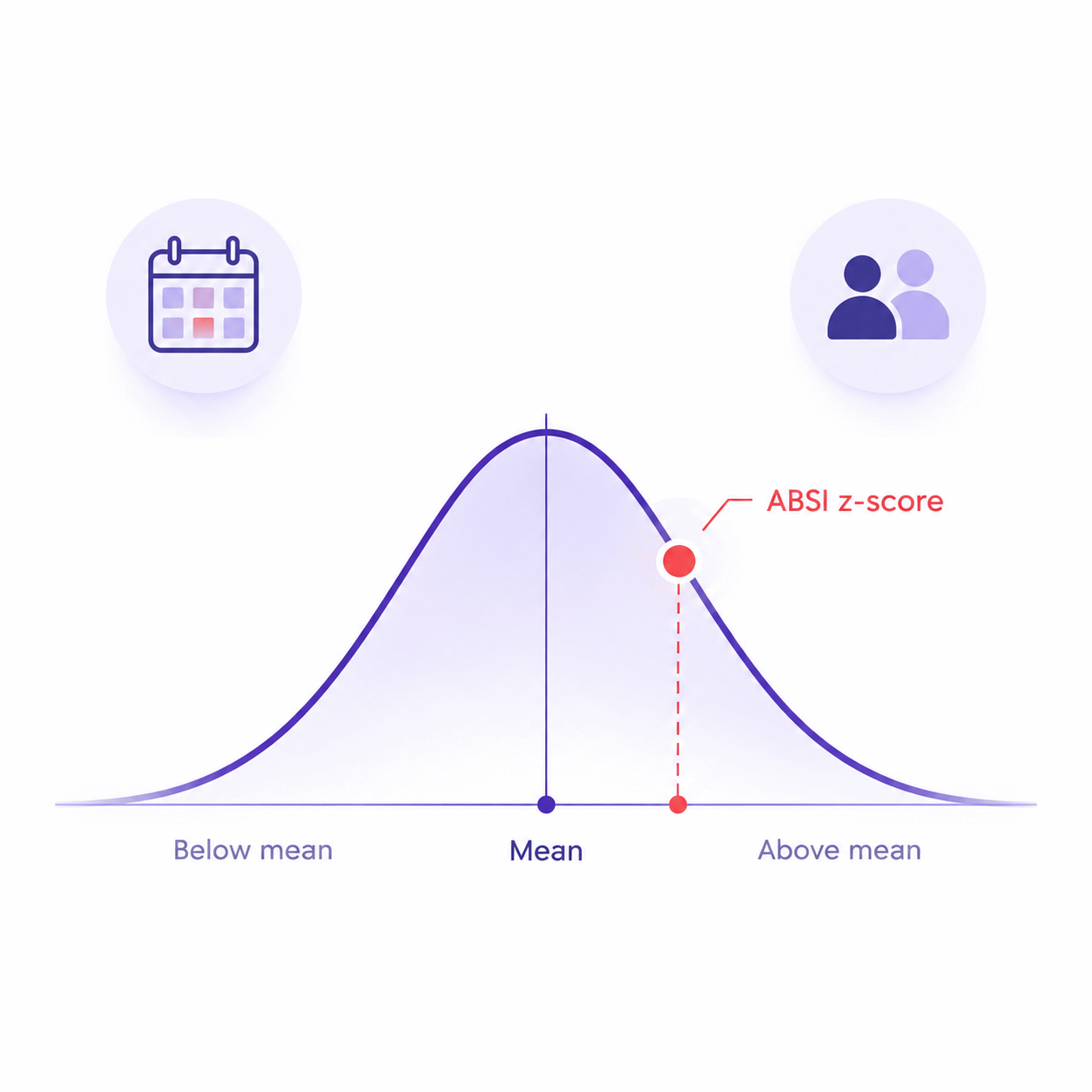
- A z score of zero matches the group mean. Above zero is higher; below zero is lower.
- Five bands help adults read the z score. They cannot tell one person’s chance of illness or death.
- People under 18 should not use adult risk bands. Pregnancy also limits how the bands apply.
The ABSI Calculator works best when you use the same tape spot. Check a result that looks odd. Save your age, height, weight, waist, and units. Weight can change raw ABSI even if your waist stays fixed. Talk with a doctor if a result concerns you. Blood pressure and health tests may add facts this tool cannot show.
Assumptions used in this calculator
- Height and waist circumference are converted to meters before calculation.
- Weight is converted to kilograms before calculating BMI.
- Reference values depend on whole-year age and selected sex.
- Age 85 uses the oldest published reference category.
- The reference population represents a historical United States survey.
- ABSI z-scores compare people with their age- and sex-specific reference groups.
- Only adults receive a mortality reference band.
- Children may receive z-scores without adult risk interpretation.
- All body measurements must be positive and physically plausible.
- Waist measurements should follow a consistent anatomical protocol.
- Pregnancy can limit comparison with the nonpregnant reference sample.
- Two known body measurements are required for reverse solving.
- A reference band does not estimate individual mortality probability.
Results are rounded for display.
Internal calculations use full precision.
Formulas Used in ABSI Formula Calculator :
Calculate body mass index
Calculate A Body Shape Index
Standardize against the age and sex reference
Variables & Definitions
View a complete list of all variables used in this calculator, including definitions and units
ABSI Formula Variables and Population Reference Values
| Symbol | Variable | Base unit | Role |
|---|---|---|---|
| a | Age in completed years | years | Selects the reference row |
| s | Sex used for comparison | female or male | Selects the reference table |
| H | Height | m | Body measurement |
| W | Weight | kg | Body measurement |
| C | Waist circumference | m | Body measurement |
| BMI | Body mass index | kg/m2 | Intermediate result |
| ABSI | A Body Shape Index | m11/6 kg−2/3 | Body shape result |
| μa,s | Mean ABSI at age a and sex s | ABSI units | Population reference |
| σa,s | ABSI standard deviation at age a and sex s | ABSI units | Population reference |
| z | ABSI z-score | standard deviations | Standardized result |
Unit Conversion Table
Height Unit Conversions
| Unit Group | Unit Name | Symbol | Equivalent in meters | Used For |
|---|---|---|---|---|
| Popular Units | Centimeter | cm | 1 cm = 0.01 m | Height |
| Popular Units | Meter | m | 1 m = 1 m | Height |
| Popular Units | Inch | in | 1 in = 0.0254 m | Height |
| Popular Units | Foot | ft | 1 ft = 0.3048 m | Height |
| Scientific Units | Millimeter | mm | 1 mm = 0.001 m | Height |
Weight Unit Conversions
| Unit Group | Unit Name | Symbol | Equivalent in kilograms | Used For |
|---|---|---|---|---|
| Popular Units | Kilogram | kg | 1 kg = 1 kg | Weight |
| Popular Units | Pound | lb | 1 lb = 0.45359237 kg | Weight |
| Popular Units | Stone | st | 1 st = 6.35029318 kg | Weight |
| Scientific Units | Gram | g | 1 g = 0.001 kg | Weight |
Waist Circumference Unit Conversions
| Unit Group | Unit Name | Symbol | Equivalent in meters | Used For |
|---|---|---|---|---|
| Popular Units | Centimeter | cm | 1 cm = 0.01 m | Waist circumference |
| Popular Units | Inch | in | 1 in = 0.0254 m | Waist circumference |
| Scientific Units | Meter | m | 1 m = 1 m | Waist circumference |
| Scientific Units | Millimeter | mm | 1 mm = 0.001 m | Waist circumference |
Example Calculation
A 45-year-old woman is 165 cm tall, weighs 70 kg, and has a 92 cm waist.
Height = 1.65 m; weight = 70 kg; waist = 0.92 m.
BMI = 70 / 1.652 ≈ 25.7116620753 kg/m2.
ABSI = 0.92 / [(70 / 1.652)2/3 × √1.65] ≈ 0.082216519465.
z = (ABSI − 0.07879) / 0.00476 ≈ 0.719857030555.
Displayed ABSI: 0.082217 · Displayed z-score: 0.719857 · High adult reference band
The waist is converted to meters before the calculation. The age and sex select the reference mean and standard deviation. The reference band compares this z-score with adults in the source population.
A 40-year-old man enters height 175 cm, weight 75 kg, and a target z-score of 0.5; waist circumference is blank.
Target ABSI = 0.08087 + (0.5 × 0.00370) = 0.08272.
BMI = 75 / 1.752 ≈ 24.4897959184 kg/m2.
Waist = 0.08272 × (75 / 1.752)2/3 × √1.75 ≈ 0.922825657462 m.
Solved waist: 92.2825657462 cm · ABSI: 0.08272 · z-score: 0.5 · High adult reference band
The entered z-score sets a target ABSI for the selected age and sex. Height and weight provide the remaining measurements needed to solve waist circumference. The displayed waist uses 12 significant digits; the equation keeps full calculation precision.
Results are rounded for display.
Internal calculations use full precision.
Calculations Disclaimer
Why Can the Same BMI Hide Two Different Waists?
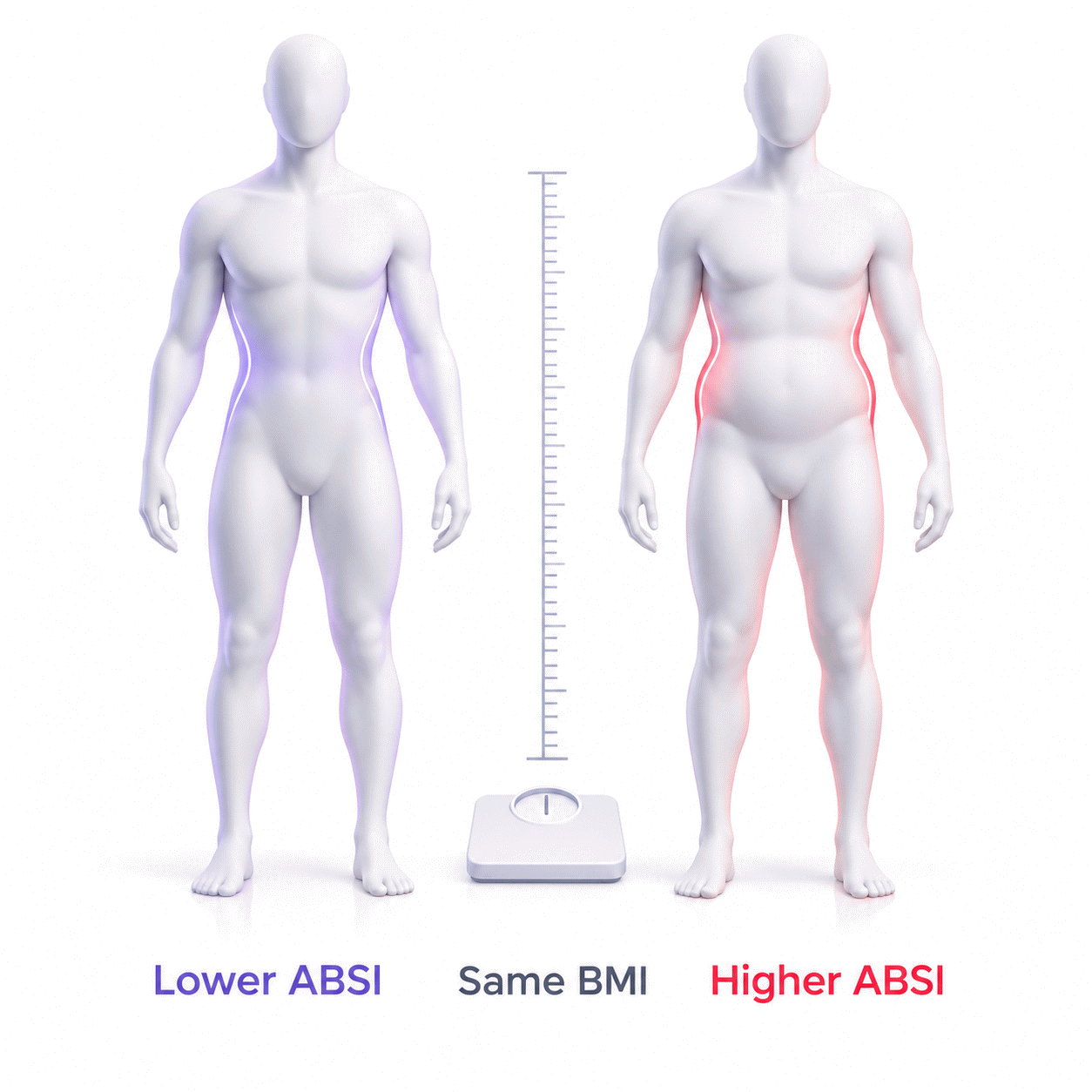
Two people can share one BMI, yet their waists can differ. The ABSI Calculator shows that gap. ABSI stands for A Body Shape Index. The ABSI Calculator uses waist, height, and weight to describe body shape. Age and sex set a group for the z score. The result answers a clear question: How large is this waist for this body size?
Weight alone cannot answer that question. A scale cannot show where mass sits. A waist tape adds information that BMI leaves out. You can use the result to start a more informed health conversation. You cannot use it to diagnose an illness or predict your future.
What a Tape Measure Adds to Weight and Height
Imagine two adults with matching height and weight. Their BMI values will match. Their waists may differ by several centimeters. The person with the larger waist will have the larger ABSI. That difference explains the purpose of this index. It focuses on waist size after accounting for overall body size.
A larger waist may reflect more abdominal fat, but the tape cannot identify tissue. It cannot distinguish fat from muscle, fluid, or other changes. Nor does it reveal blood pressure, blood sugar, or cholesterol. Keep those limits in mind as you read any score.
Waist readings can shift during the day. A meal, clothing, or tape spot can change the reading. A second tape check often helps more than another decimal place. Use the same method each time before you compare results.
Why Body Size Changes the Meaning of a Waist Number
A 90-centimeter waist needs context. Its meaning can change with body size. ABSI checks waist size against height and BMI. This step makes the waist figure more useful across body sizes.
This step does not make the result a complete health score. Two people can have similar ABSI values and unlike health histories. Age, habits, medicines, and existing conditions still matter. Read the score as one part of a bigger picture.
How Does A Body Shape Index Work?
You may wonder why five inputs appear when ABSI describes a waist. The math has two steps. Height, weight, and waist produce the raw index. Age and the chosen sex group shape the later z score. This split helps explain a result that looks odd.
First, Connect Height and Weight Through BMI
BMI starts with body mass divided by squared height. The calculator converts weight to kilograms and height to meters first. That keeps the method consistent across unit choices.
BMI describes weight relative to height. It does not say how much of that weight surrounds the waist. That is why the calculation continues. A BMI figure alone cannot produce ABSI without a waist measurement.
Then, Compare Waist Size With Expected Body Size
The next step divides waist size by a body-size factor. Waist and height both use meters. The factor uses BMI raised to two-thirds and height raised to one-half.
At unchanged height and weight, a larger waist gives a larger ABSI. That makes it easy to test one change. Change only waist to see its direct effect. If weight also changes, the BMI factor changes too.
The raw value is often a small decimal. It is not a percentage. It is not an estimate of body fat. Treat it as an index built from readings. Then read its z score.
Why Age and Sex Enter the Reference Comparison
Age and sex do not enter the raw ABSI formula. They select the group mean and spread used for its z score. Change either choice while keeping the readings fixed. The raw ABSI stays the same, but the z score may move.
That gap matters when people compare screenshots. One score describes measured shape. The other checks that shape against an age and sex group. The sex choice follows the study’s group table. It does not describe every person’s body or identity.
- Height and weight produce BMI.
- Waist, height, and BMI produce raw ABSI.
- Age and sex select a group mean and spread.
- Raw ABSI and that group produce the z score.
Where Should You Measure Your Waist?
A small shift in tape spot can alter your result. Measure with care before you worry about a changing score. The ABSI data used a clear body landmark for the waist. That gives you a steady starting point.
Find a Repeatable Tape Position
Stand upright with your abdomen relaxed. Find the upper edge of your hip bone at your side. Place the tape just above that edge. Wrap it around your body at the same height. A mirror or another person can help check the back.
Do not switch between the hip bone and belly button methods. Those spots can give two readings. The same tape spot matters most when you track change. If you cannot find the landmark, ask a doctor to show you.
Use a flexible measuring tape with clear markings. Thick clothing can change the reading. Measure over bare skin or thin fabric when possible. Record the number and its unit before entering it.
Keep the Tape Level and Your Breath Natural
Keep the tape horizontal from front to back. It should sit snugly without pressing into skin. Breathe normally, then read it after a relaxed exhale. Do not pull your stomach in or hold your breath.
Repeat the measure if the tape slipped or twisted. If two readings differ, check the tape before choosing one. A steady setup helps you notice real change over time. A similar time of day may also reduce noise.
Height and weight deserve the same care. An old height figure can distort BMI and ABSI. Use a current weight from a reliable scale. Recheck an unexpected result before reading its label.
How Do You Read an ABSI Z Score?
A raw ABSI value may look too small to explain itself. The z score adds group context. It shows how far the value sits from the group mean. Start there when you read the result.
Understand the Reference Mean and Spread
For each age and sex group, the table has a mean. It also has a standard deviation, which shows the group’s spread. The calculator takes the mean from raw ABSI. It then divides that gap by the standard deviation.
Zero means the raw value matches its group mean. A positive score sits above that mean. A negative score sits below it. A score of one means one standard deviation above the mean. It does not mean a 100 percent chance of disease.
Age can change the chosen group, even when your waist stays fixed. Compare the raw value as well as the z score. Record age and sex choices when you save a result.
Read the Five Adult Display Bands
Adults may see one of five labels beside the z score. The labels come from the unrounded z score. A value near a boundary may look rounded in the display.
- Below −0.868: very low.
- From −0.868 to below −0.272: low.
- From −0.272 to below +0.229: average.
- From +0.229 through +0.798: high.
- Above +0.798: very high.
These cutoffs apply to the z score, never the raw ABSI decimal. If your displayed value sits near a cutoff, trust the shown band. Its calculation uses more digits than the rounded display.
Why a Band Is Not Your Chance of Death
A high label can sound alarming. It does not state your personal chance of dying. The labels summarize how ABSI related to outcomes across studied adults. Your own future depends on many facts this tool cannot see.
A low band is no promise of good health, either. Blood pressure, smoking, illness, and family history still matter. The bands do not diagnose diabetes, heart disease, or any other condition. They also do not set a personal treatment goal.
For users under 18, avoid reading an adult mortality band. The adult risk study did not test children. A young user’s raw ABSI and z score need more care. Discuss concerns about a child’s growth with a doctor.
What Changes When You Use the Calculator?
A result that looks odd raises a clear question: Which input caused it? Start with your actual readings. Then change one value at a time to explore the link. This keeps a simple check from becoming a guessing game.
Build a Useful Baseline From Your Measurements
Select the female or male group and enter your age. The group table covers ages 2 through 85. Add current height, weight, and waist. Check each unit beside its input. The tool accepts common metric and imperial units. It converts values before the math. The same measures give the same score in either unit system.
Read the raw ABSI first. Then read the z score and adult band, when they apply. Keep a record of the inputs and the date. A saved result without its units can be hard to read later.
You do not need body fat percentage or a fitness device. A tape, scale, and reliable height measure are enough. Good input quality matters more than extra precision on a screen.
Compare Waist Changes Without Moving Other Inputs
Suppose your waist size changes, but height and weight stay fixed. A larger waist raises the raw ABSI. A smaller waist lowers it. The z score follows if the same group stays in use.
Now suppose your weight changes too. BMI changes, which changes the ABSI size factor. Your raw score may move in a less clear way. Check the actual inputs before you call that shift an improvement.
The calculator can also work backward from a chosen score. It can find a matching waist, weight, or height when other values stay fixed. Such a result is a math case, not a health target. Talk with a doctor before you set health goals from it.
- Check the tape spot and entered units.
- Find every input that changed.
- Compare raw ABSI, then its z score.
ABSI, BMI, and Waist-to-Height: Which Question Does Each Answer?
Body measures answer different questions about one person. Choose the number that fits your question. Keep their meanings clear when you discuss a result.
What Each Number Captures
BMI compares weight with height. It cannot locate body fat. Waist circumference measures the distance around your middle at one chosen level. Waist-to-height ratio compares that distance with your height.
ABSI uses waist, BMI, and height together. It asks whether your waist is large for your body size. Its z score adds an age and sex group. None of these tools can measure deep belly fat directly.
A tape reading alone remains useful. Its simplicity makes repeat measures easy. A BMI result can also provide context for weight. The indexes complement one another when their questions differ.
When Two Numbers Tell Different Stories
Can a normal BMI appear beside a high ABSI z score? Yes. BMI may look typical while waist size is large for that body size. That gap can prompt a closer look at waist and other health measures.
Can BMI rise while ABSI falls? It can, because the bottom of the fraction changes. You need all the inputs to understand the shift. No single number reveals whether muscle, fat, or fluid changed.
People in two age groups can have similar raw ABSI values. Their z scores may differ because the group means differ. When you compare results, name the number you mean. Otherwise, the comparison can mislead.
What Can an ABSI Score Miss?
Every easy health number leaves something out. ABSI uses a few body readings. It cannot see your symptoms, lab results, habits, or health history. Its limits matter most when a label looks safe or worrying.
Understand Who the Evidence Describes
The adult risk analysis involved people who were not pregnant. It did not test the same risk meaning for children. Pregnancy can also change waist size in ways this index cannot explain.
Group means do not fit each person equally. Your age and sex choices set the group, not a diagnosis. Health risks can differ even among people with the same score.
Body shape also varies for reasons beyond belly fat. The index cannot measure deep fat or lean tissue directly. That is why a doctor may use other measures and tests. A single waist-based result should not replace them.
Bring the Result Into a Broader Health Conversation
If a high band concerns you, bring the readings to a doctor. Share height, weight, waist, age, and the shown result. Mention how you measured the waist. Ask which other health factors need a closer look.
If a low band comforts you, keep that same broad view. It cannot rule out disease or remove an existing concern. Symptoms deserve attention even when a calculator looks reassuring.
You can also ask for help with a steady tape routine. That makes later changes easier to read. A good next step should fit your health history, not a generic score.
What Is Your Next Useful Step?
A result helps most when it leads to a clear action. Check your entries, especially tape spot and units. Read raw ABSI and the z score as separate results. If you are an adult, read the band as group context.
Save your readings with a date before leaving the page. Repeat them the same way if you want to follow change. Compare the inputs, not just the color of a label. A new band near a cutoff may reflect a tiny shift.
Bring a concerning result into a wider health discussion. Ask about blood pressure, relevant tests, and your personal history. No calculator can make that decision on its own. Its best use is a clearer question for the next conversation.
Frequently Asked Questions
Why can I get a different result when I measure again on the same day?
Can I use someone else's ABSI band to judge my own health?
What should I record if I want to follow my waist over time?
What if a result seems out of line with my usual health checks?
Why can rounding a displayed z score make the band look inconsistent?
How does reverse solving find a waist from a target ABSI z score?
Why does changing the reference category alter z but not raw ABSI?
Our engineers are here to help you get it right.