Draw Length Calculator
- Last formula update:
Decimal & Rounding Policy
- Wingspan and estimated draw length use the same length units before calculation.
- Conversions and the 2.5 division retain full working precision.
- Displayed values show up to eight decimal places; unnecessary trailing zeros are omitted.
- Changing a unit preserves the underlying measurement; rounding affects display only.
Valid range
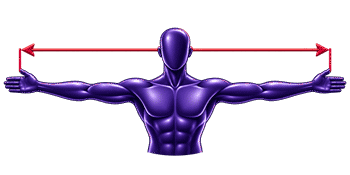
- Wingspan: 30–300 cm, measured from middle fingertip to middle fingertip.
- Estimated draw length: 12–120 cm, corresponding to the wingspan range.
- Enter one finite, positive measurement; the other value updates automatically.

Brinelle Lumquell
Reviewers:
Cavarine Pexmont
Yeldric Vossbourne
Check our editorial policy
September 28, 2026
1.0.0
Initial calculator and formula release.
Our engineers are here to help you get it right.
Assumptions used in this calculator
- Wingspan is measured between middle fingertips with arms level and relaxed.
- The calculated draw length is a starting estimate for bow fitting.
- The 2.5 divisor is dimensionless and remains fixed across units.
- Both measurements describe lengths, so compatible conversions apply.
- The last edited value determines the other; values are not averaged.
- Mixed feet and inches use whole feet and fewer than twelve inches.
- Mixed meters and centimeters use whole meters and fewer than one hundred centimeters.
- One international inch equals exactly 2.54 centimeters.
- Intermediate calculations are not rounded to the displayed precision.
- Displayed numbers use no more than eight decimal places.
- Posture and anchor technique can change an individual’s actual draw length.
- Bow settings require confirmation at full draw before adjustment.
- Arrow cut length is determined separately from this estimate.
Results are rounded for display.
Internal calculations use full precision.
Formulas Used in Draw Length Calculator :
Convert the entered measurement to centimeters
Estimate draw length from wingspan
Lcm is either entered length in centimeters. The main number a uses factor f centimeters per unit. The optional minor number b uses factor g centimeters per minor unit; b and g are zero for single-unit entries. Wcm is wingspan, Dcm is estimated draw length, and 2.5 is dimensionless. Editing draw length solves the same relationship for wingspan; the result is converted to its selected display unit.
Variables & Definitions
View a complete list of all variables used in this calculator, including definitions and units
Draw Length Variables and Unit Factors
| Symbol | Meaning | Unit |
|---|---|---|
| Lcm | Entered wingspan or draw length after conversion | cm |
| a | Main numeric component of the entered length | Selected main unit |
| f | Centimeters per main unit | cm per main unit |
| b | Optional minor numeric component; zero for single units | Selected minor unit |
| g | Centimeters per minor unit; zero for single units | cm per minor unit |
| Wcm | Measured or reverse-calculated wingspan | cm |
| Dcm | Estimated or entered draw length | cm |
| 2.5 | Fixed wingspan-to-draw-length divisor | Dimensionless |
Unit Conversion Table
Draw Length Unit Conversion Table
| Unit Group | Unit Name | Symbol | Equivalent in cm | Used For |
|---|---|---|---|---|
| Popular Units | Inch | in | 1 in = 2.54 cm | Wingspan and bow draw length |
| Popular Units | Centimeter | cm | 1 cm = 1 cm | Metric length entry and calculation base |
| Popular Units | Feet and inches | ft / in | (ft × 30.48) + (in × 2.54) cm | Two-part length entry |
| Popular Units | Meters and centimeters | m / cm | (m × 100) + cm | Two-part metric length entry |
| Scientific Units | Millimeter | mm | 1 mm = 0.1 cm | Fine length measurements |
| Scientific Units | Meter | m | 1 m = 100 cm | Metric wingspan measurements |
Example Calculation
Measured wingspan: 73.25 in = 186.055 cm.
Formula: estimated draw length = wingspan ÷ 2.5.
Calculation: 186.055 cm ÷ 2.5 = 74.422 cm.
Estimated draw length: 74.422 cm = 29.3 in.
A relaxed, level arm-span measurement supplies the starting value.
Both lengths use centimeters during the calculation.
The result estimates fit; it does not set an exact bow specification.
Confirm comfort and alignment at full draw before changing equipment.
Entered draw length: 27.75 in = 70.485 cm.
Formula: wingspan = draw length × 2.5.
Calculation: 70.485 cm × 2.5 = 176.2125 cm.
Calculated wingspan: 176.2125 cm = 69.375 in.
The entered draw length determines the corresponding wingspan under the fixed ratio.
Both measurements use centimeters during the reverse calculation.
This is the algebraic reverse of the same wingspan-based estimate.
Use a measured wingspan and a full-draw fitting to evaluate the result.
Results are rounded for display.
Internal calculations use full precision.
Calculations Disclaimer
What should you check before choosing a bow?
A bow listing can look perfect until its draw range misses your actual fit. A draw length calculator gives you a good first number from wingspan. Use it to narrow your choices before visiting a shop. The AxiCalculator draw length calculator divides measured wingspan by 2.5. It also converts common length units and solves backward from an entered draw length. The answer helps start a conversation; it does not set a bow for you.
Measure first, compare the model’s stated draw range, then test at full draw. That order saves time when several bows look alike. A small change in your anchor can change how a setting feels. Your release, tab, stance, and shoulder position also matter. A quick estimate works best when it leads to a better fit check.
Use an arm-span estimate to narrow the search
Suppose two compound bows have different published draw ranges. Your measured span gives a way to screen them. Enter it in the unit printed on your tape. The tool returns the related draw-length estimate. You can switch the output to inches when comparing a bow listing. If the estimate sits near a model’s limit, check its exact modules. A broad advertised range may require parts or steps that vary by model.
Keep the unrounded reading in your notes. A result like 28.4 inches does not imply a 28.4-inch module exists. The bow’s available settings and your form decide the trial position. One good shopping note has three lines: measured span, estimated length, and model range. That is more good than a guess based only on height.
Know which decision the number cannot make
The formula knows your span, not your shooting position. It cannot see a bent bow arm or a strained anchor. It does not measure the bow’s draw stop. It cannot set arrow cut length or select arrow spine. Those choices use the actual bow, full-draw position, rest, weight, and shaft data.
Keep product claims separate from calculator claims. A listing may show an adjustable range without showing its service cost. Check the maker’s guide before changing any compound parts. Ask how any promised fit was checked. A careful fitting leaves room to test, observe, and adjust.
How do you measure fingertip-to-fingertip wingspan?
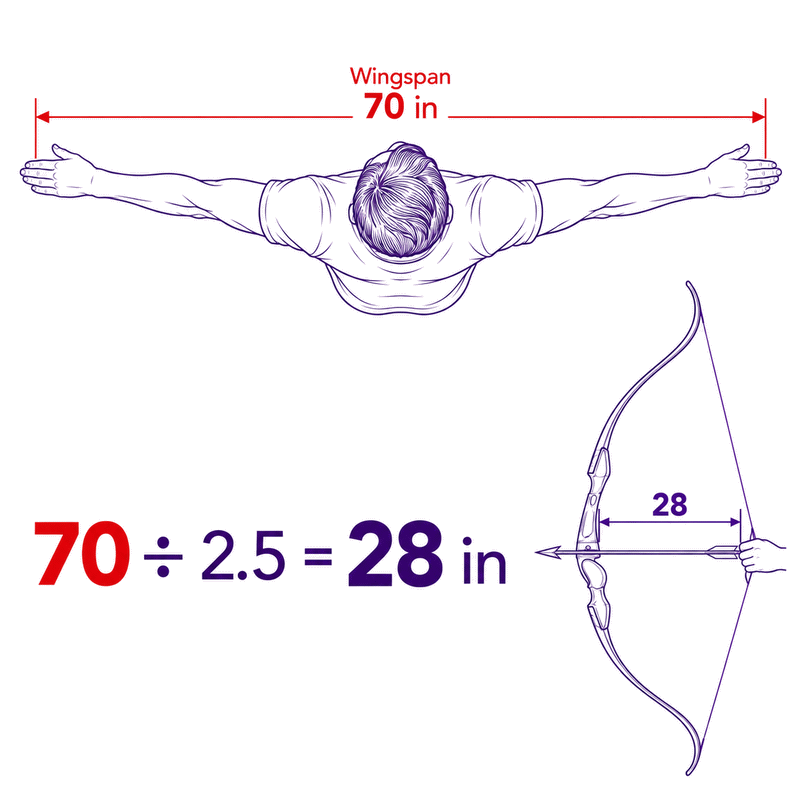
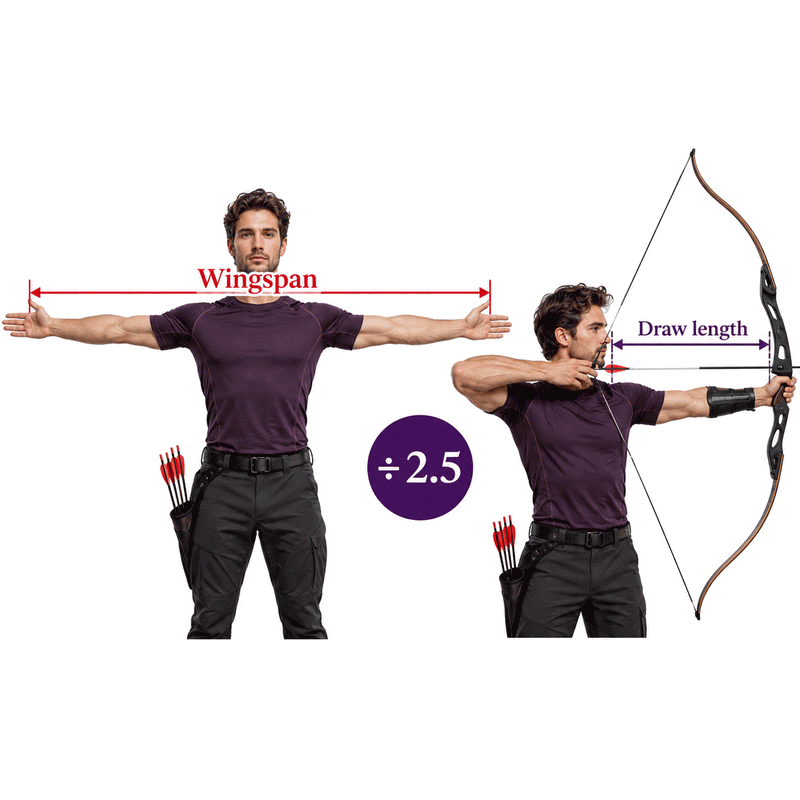
A rushed tape reading can shift every later comparison. Stand upright with your arms level in a relaxed T shape. Have another person measure between the tips of your middle fingers. Keep the tape straight and note the unit. This is an arm-span reading, not a reach test. Avoid stretching your fingers or rolling your shoulders back to gain distance.
A wall can help keep the arms level. It is not a reason to press hard into a forced posture. If you cannot keep a tape straight alone, ask for help. The result is only as good as the input. A precise display cannot repair a poor reading.
Keep the arms level without reaching
Look at both hands before your helper reads the tape. They should sit at similar height. Let your shoulders settle. Do not shrug, arch, or rotate to make the span larger. These small changes alter the distance between fingertips. They also make a repeat reading harder to match.
Thick sleeves can hide arm position. Move clothing away from the tape path when practical. Mark the fingertip positions on a wall if that makes reading easier. Keep the same stance for a second reading. If the readings differ, repeat until the method is steady. Record the measured span, not a rounded height proxy.
Repeat the reading and record the unit
Write down both readings with their units. For instance, 70 inches is not 70 cm. A simple unit mistake can make a bow search useless. The tool supports inches, cm, feet with inches, meters with cm, millimeters, and meters. Mixed units should use whole major units and a smaller remainder.
Choose the unit that matches the tape. Change display units later without changing the measured length. When you share the result with a coach, include the first span. That lets the coach check the estimate or remeasure it. Reverse mode finds the matching span from a known draw length under the same rule.
What does wingspan divided by 2.5 tell you?
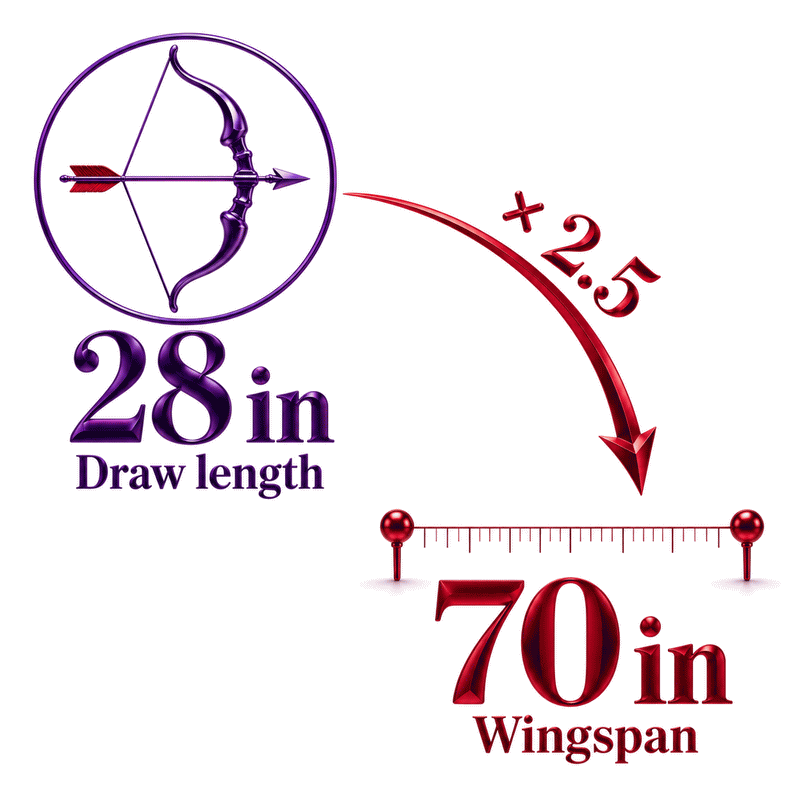
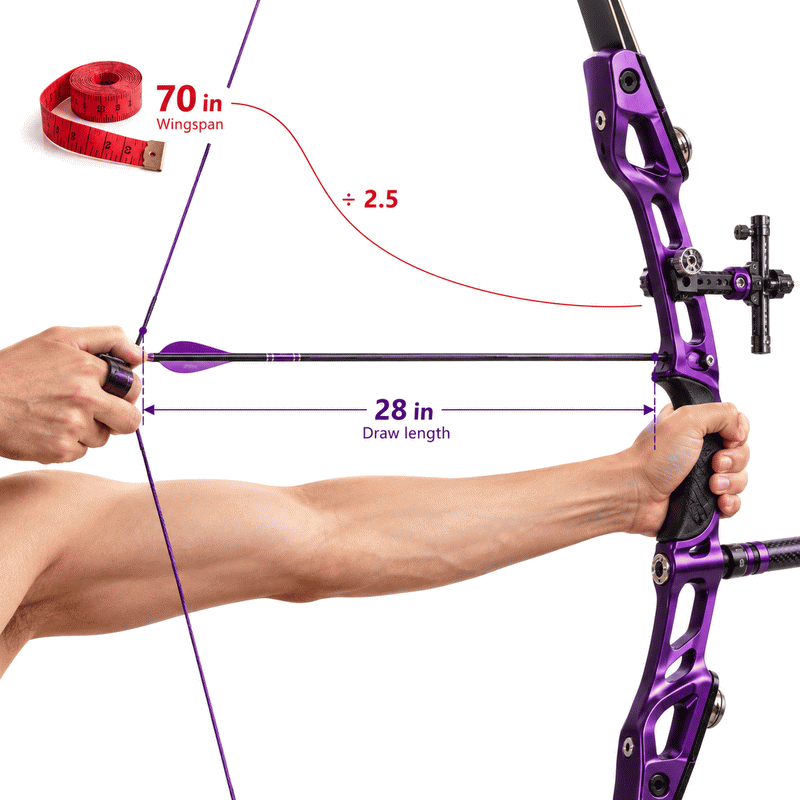
A decimal result may look exact, but fit has not yet been measured. The relationship is an estimate from body size. Divide wingspan by 2.5 while both lengths use the same unit. A 70-inch span gives a 28-inch starting draw length. This math is easy to repeat by hand. It is also easy to misuse if you treat it as a final bow spec.
The tool converts entries to cm for the math. It keeps working values without deliberate intermediate rounding. The display shows up to eight decimal places. Those extra digits describe arithmetic, not the uncertainty in your arm span or posture.
Read the same result in inches or cm
Many bow specs use inches, while many tape measures show cm. One international inch equals exactly 2.54 cm. For example, a 175-cm wingspan gives a 70-cm estimate. That is about 27.56 inches. The cm and inch readings describe the same length.
Use the unit printed on the product page when comparing candidates. Keep the first reading in your notes. If a bow lists half-inch settings, use nearby settings as trials. Do not force the tool’s decimal into a setting that the bow cannot make. Confirm the available steps in the model guide.
Treat decimal digits as arithmetic, not fit certainty
A number such as 27.55905512 inches can be calculated from exact unit factors. It cannot tell you where your anchor settles. Tape placement may change the input more than the final decimal digits. A half-inch difference can matter at full draw. No fixed rounding rule selects everyone’s best fit.
Use the figure to plan a fit check. Test a nearby allowed setting with safe supervision. Watch your bow arm, shoulder, and release hand. Repeat shots with a calm, consistent anchor. If the setup feels strained, stop and ask a coach or technician to inspect it. The goal is repeatable form, not more digits.
How does the estimate meet a real bow setup?
A bow can list the right number yet feel wrong at full draw. The tool estimates a body-based starting point. A compound bow’s cam and stop set its mechanical position. A recurve archer’s draw depends more directly on repeatable movement and anchor. Treat these as related but distinct checks.
Before changing parts, compare the printed model range with the setup in hand. Look for the maker’s module table and service guide. Some changes are simple; others require specialized tools. The number from wingspan tells you what to investigate. It does not authorize an change beyond the gear’s guide.
Check the compound cam and draw stop
A compound bow should reach its stop without forcing your shoulders or head. The actual setup can be measured on suitable shop gear. A trained technician may use a draw board or a marked checking arrow. Ask which reference point is used for the published draw length. Bow specs often follow a nocking-point-to-grip-pivot reading plus 1.75 inches.
Test with the release you plan to use. Your hand and anchor can move when the release changes. Check that the string reaches a stable position without reaching backward. An apparently close chart number may still need a different permitted setting. Record the tested module position, not just the estimated span result.
Consider the recurve anchor and clicker
A recurve bow lacks a compound cam stop. The archer’s draw and anchor help define the repeatable position. A clicker can help check consistent expansion, but it needs careful setup. Your draw may change as technique develops. That makes an in-person observation especially good for beginners.
A bow’s overall length, limb rating, and arrow choice also shape the experience. Do not infer them from wingspan alone. Try gear at a club or shop when possible. A coach can watch how you reach full draw across several shots. This shows more than one frozen tape reading.
What can a long or short setting change?
A bow that pulls you past a stable anchor can invite compensation. You may move your head, lock the front arm, or strain to reach the stop. A short setting may leave you cramped or unable to settle naturally. Neither feeling proves a single cause. Stance, release, and technique can produce similar signs.
Stop before changing hardware from one uncomfortable shot. Check your posture with a knowledgeable observer. Compare repeatable shots, not one awkward pull. If discomfort persists, let a coach or technician evaluate the full setup. Comfort, safety, and control matter more than chasing a larger number.
Watch the bow arm and anchor at full draw
At a fit check, look for an arm that reaches naturally without locking. Watch where the string and release hand settle. A repeatable anchor is more good than one forced position. The shoulders should not climb just to gain distance. Video can help you review form, but angle and perspective can mislead.
Use several safe shots to see whether a pattern repeats. Ask the observer what changed between shots. If the number from the tool differs from the tested setup, keep both readings. The difference can guide a second reading or an gear check. It does not mean either number should be hidden.
Separate draw length from arrow cut length
An arrow can be unsafe if it slips behind the rest at full draw. Draw length alone does not tell you where the arrow’s front end will sit. Rest location, riser shape, point, and shooting style matter. Start with a full-length shaft and have its final position checked. Follow the arrow maker’s selection chart for the complete setup.
Changes to draw length can affect arrow selection and tuning. Revisit both after a meaningful change. Do not use a universal one-inch margin as a substitute for checking the real bow. A technician can verify clearance before shafts are cut. Once material is removed, the decision cannot be reversed.
How should you compare bows before spending money?
A low listed price may hide parts or service that your fit needs. Start with the tested draw position and the maker’s stated range. Then check the exact model, year, cam version, and module options. A range on a listing may not explain how each position is reached. Used bows deserve extra care because installed parts may differ.
Keep the buying comparison simple. Record the fit range, required parts, service access, and total quoted cost. Do not compare only headline speed or draw weight. Prioritize a bow that fits your repeatable position. Ask a seller to show the configuration before payment.
Read the exact draw range and required parts
Look for the maker’s current guide for that model. Confirm whether the cam uses positions, modules, or a different component. Ask whether a press is required and who will perform the work. Check the stop and timing after change where the maker requires it. Avoid assuming every model shares the same half-inch increments.
For an online listing, request a photo of the model identification and installed modules. Verify the information against the maker. This step can prevent a purchase that cannot reach your tested fit. The tool narrows the search. The model documentation and a hands-on check finish it.
Compare the full setup cost and service access
Budget for more than the bare bow. A release, arrows, rest, sight, and fitting can affect the total. Prices and stock change, so use current seller quotes. Ask what is included and what still needs fitting. Check return terms and maker coverage directly with the seller. Do not assume a listing includes modules or setup work.
For a first recurve, lessons or a club session may answer questions before purchase. For a compound, local service access can be important. A suitable bow can become a poor purchase if the required change is unavailable. Use your estimate as a filter, then make the final choice with real specs.
What happens at a hands-on fitting?
Walking into a shop with only your height leaves good information behind. Bring your measured wingspan and the tool estimate. Bring your usual release or finger tab. Tell the fitter which bow styles and models you are considering. That gives the session a starting point without pretending the formula already settled the answer.
Ask how the shop measures the bow and observes your form. The reference used for a compound spec can differ from a simple body span. Watch for a stable anchor and comfortable front arm. Try the setting across more than one shot when safe. Record the setup that was actually tested.
Bring the estimate and your usual release
A different release can move the position of your drawing hand. A new anchor can change how the same setting feels. Testing your normal gear makes the check more relevant. If you are new, tell the coach that your form is still developing. A beginner’s first setting may need later review as technique settles.
Share the measured wingspan and unit, not only the rounded result. The fitter can recheck the tape reading if it seems unusual. Ask about the bow’s permitted range and change steps. Write down the model, module, and tested setting. These details make a later comparison much easier.
Test a repeatable anchor with a coach or technician
One comfortable draw can be luck. Repeat the movement while an experienced person observes. Check whether the head moves toward the string. Notice whether the front arm locks or the shoulders rise. Ask for a clear reason before changing a setting. A small change should solve a specific problem, not chase a formula.
Stop if the position causes pain or feels unsafe. Let a qualified person handle gear changes that need special tools. A fit check is a process of observation and testing. The tool remains good because it gives the process a sensible starting value.
What changes after you choose a bow?
A confirmed fit may change as your form, gear, or release changes. Save the reading, tested setting, and date. Keep notes on what felt stable and what did not. This helps distinguish a real fit change from a poor day at the range. AxiCalculator can share or export the estimate for discussion.
Keep the saved figure as a record of the math. It does not certify bow fit. If you switch bows, check the new model’s actual setup. If a child grows, repeat the wingspan reading. A consistent process makes later choices easier to explain and safer to check.
Recheck arrows and tuning after a draw change
Changing the draw position can change how an arrow fits and behaves. Ask a technician to check shaft clearance at full draw. Review arrow cut length and spine using the maker’s chart. Then assess tuning with the actual bow and components. These checks belong after a fit change, not inside a one-input draw calculator.
Keep old notes until the new setup is proven. A change in groups can have several causes. Record one change at a time, then test again. If gear is new, start with the maker’s setup guidance. Your estimate is one part of a wider fit record.
Save the result and revisit it as form develops
Use the tool whenever you need the same ratio in another unit. Enter wingspan to estimate draw length. Enter draw length to find the matching wingspan under that same relationship. The reverse result is algebra, not a fresh body reading. You can export a PDF, save a formula-based spreadsheet, or share a link.
Before your next purchase, compare the saved estimate with a current full-draw check. If they disagree, remeasure and ask what changed. The tool helps you ask better questions. A good fitting answers them with the bow in hand.
Frequently Asked Questions
What should I do when two wingspan readings disagree?
Can I keep the shared calculator result as my permanent bow specification?
Why does the same span look different in metric and imperial units?
How can I use an estimate when shopping for a first bow online?
What if a compound bow's measured draw differs from its module label?
Can reverse solving verify a seller's claimed draw range?
What changes in arrow selection after a draw-length adjustment?
Our engineers are here to help you get it right.