BRI Calculator
- Last formula update:
Decimal & Rounding Policy
- Height and waist circumference are converted to meters before calculation.
- BRI and inverse measurements use unrounded values throughout the calculation.
- Calculated values display up to two decimal places without unnecessary trailing zeros.
- Positive calculated values below 0.005 display with three significant digits.
- Editing a rounded BRI value uses the number entered for the inverse result.
Valid range
- Height: 50–300 cm after conversion from the selected length unit.
- Waist circumference: 20–400 cm after conversion from the selected length unit.
- Entered BRI: greater than 0 and less than 364.2; BRI has no unit.
- For a real ellipse result, waist circumference must be less than π times height.
- An inverse result must also fall within its supported height or waist range.

Brinelle Lumquell
Reviewers:
Cavarine Pexmont
Yeldric Vossbourne
Check our editorial policy
September 28, 2026
1.0.0
Initial calculator and formula release.
Our engineers are here to help you get it right.
What does a BRI Calculator tell you?
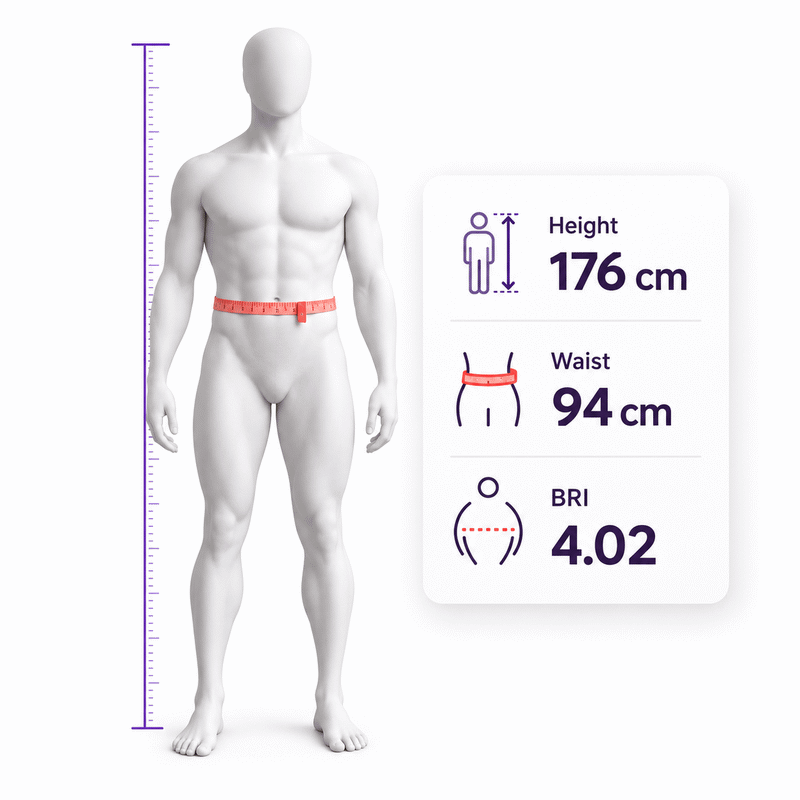
BRI Calculator results describe waist size relative to height. Enter those two measurements to see a body-shape index. The score has no physical unit and does not diagnose a condition.
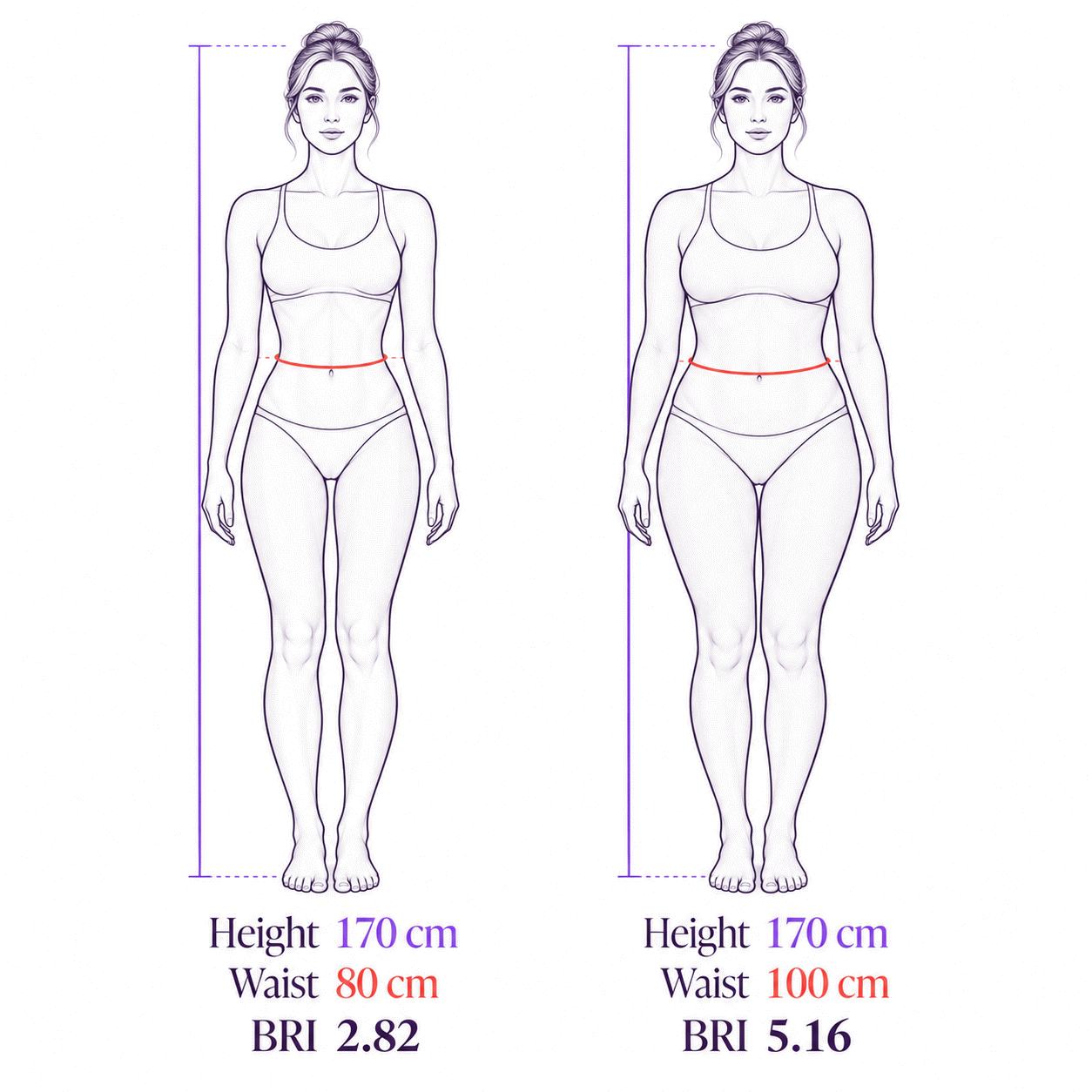
- A wider waist raises BRI when height stays the same. A smaller waist lowers it.
- BRI uses waist and height. BMI uses weight and height. The measures answer different questions.
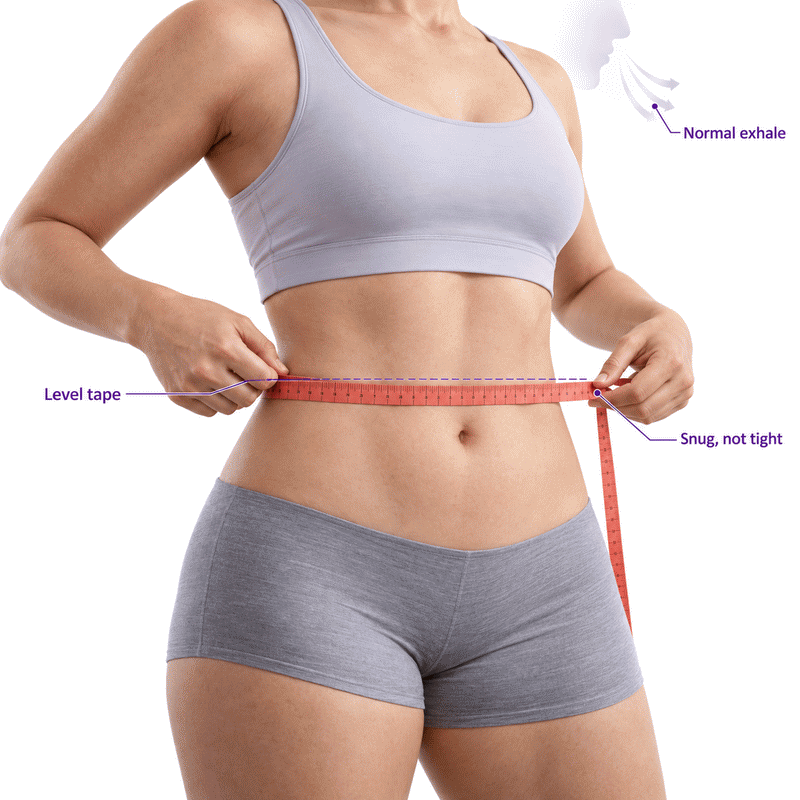
- Keep the tape level and snug. Measure after a normal exhale, without compressing the skin.
- Record your waist, height, date, and tape location. Repeat the same method to compare results.
- A BRI score does not directly measure visceral fat, body-fat percentage, or personal disease risk.
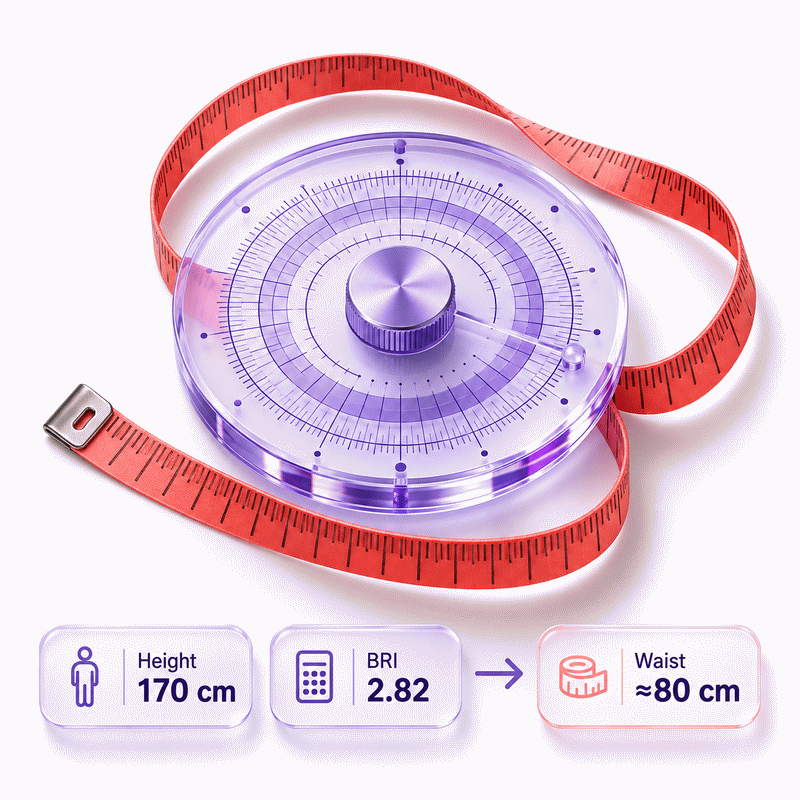
- Inverse calculations can solve for waist or height from a valid score. They describe geometry, not a medical goal.
Use the BRI Calculator to check a result and understand how waist and height relate. A small change may come from measurement technique, so recheck surprising entries before drawing conclusions. No single score fits every person or replaces a clinical review. Pregnancy, growth, illness, and other factors can change how useful a comparison is. If a result concerns you, share the original measurements and your questions with a qualified professional. AxiCalculator is a practical starting point for clear, repeatable calculations and an informed conversation.
Assumptions used in this calculator
- Height is measured standing, without shoes.
- Waist is measured consistently at the same anatomical landmark.
- The measuring tape remains level and comfortably snug.
- Both measurements describe the same person at one time.
- Length entries are converted to meters before calculation.
- BRI is dimensionless.
- The body outline is approximated by a geometric ellipse.
- The waist cross-section is approximated as circular.
- Only one of height, waist, or BRI is calculated.
- The other two values are treated as independent inputs.
- Measurements outside supported ranges are rejected.
- Study quintiles offer context, not personal risk probabilities.
- BRI cannot diagnose disease or directly measure visceral fat.
Results are rounded for display.
Internal calculations use full precision.
Formulas Used in Body Roundness Index :
Convert a selected length to meters
Calculate the Body Roundness Index
Solve for waist circumference
Solve for height
Lu is the entered length in its selected unit; cu is that unit's meter conversion factor; Lm is the converted length. H is height in meters; W is waist circumference in meters; B is the dimensionless BRI; π is the mathematical constant pi.
Variables & Definitions
View a complete list of all variables used in this calculator, including definitions and units
Body Roundness Index Variables and Supported Values
| Symbol | Variable | Unit | Use and supported value |
|---|---|---|---|
| Lu | Entered length | Selected length unit | Positive numeric height or waist entry |
| cu | Conversion factor | m per selected unit | 1, 0.01, 0.001, 0.0254, or 0.3048 |
| Lm | Converted length | m | Converted height or waist before the BRI equation |
| H | Height | m | 0.50–3.00 m |
| W | Waist circumference | m | 0.20–4.00 m and W < πH |
| B | Body Roundness Index | None | Entered inverse target: 0 < B < 364.2 |
| π | Pi | None | Mathematical constant |
Unit Conversion Table
BRI Unit Conversion Table
| Unit Group | Unit Name | Symbol | Equivalent in Meters | Used For |
|---|---|---|---|---|
| Popular Units | Centimeter | cm | 1 cm = 0.01 m | Height and waist |
| Popular Units | Inch | in | 1 in = 0.0254 m | Height and waist |
| Popular Units | Foot, decimal | ft | 1 ft = 0.3048 m | Height and waist |
| Scientific Units | Meter | m | 1 m = 1 m | Height and waist |
| Scientific Units | Millimeter | mm | 1 mm = 0.001 m | Height and waist |
Example Calculation
Both measurements use centimeters, so their ratio needs no additional conversion.
The equation uses full precision before formatting the result.
A higher score describes a rounder modeled ellipse relative to height.
This value alone cannot diagnose a health condition.
The entered waist and BRI are treated as the two known values.
The formula back-solves height without rounding intermediate steps.
The resulting height lies inside the calculator's supported range.
A target BRI is a mathematical input, not a medical recommendation.
Results are rounded for display.
Internal calculations use full precision.
Calculations Disclaimer
What can one waist reading reveal?
Your scale can stay steady while your waist changes. A BRI Calculator helps you notice that gap. The BRI Calculator relates waist size to height. It gives you a body-shape number from those two readings. You do not need a body-weight entry. That makes the tool useful when weight tells only part of your story. Yet a number cannot inspect your health. It cannot see blood pressure, sleep, fitness, or family history. Start with a careful waist reading. Then treat the result as one clue. If you want a record, save the input values too. They explain the result more clearly than a score alone.
Why the same weight can hide distinct waistlines
Two adults can weigh the same and have unlike waistlines. One may have a wider waist; the other may have more muscle elsewhere. A scale reports mass, not its location. That matters when you want to understand body shape. BRI puts the waist reading into the calculation. It also accounts for height. It does not reveal the amount of fat inside your abdomen. External tape readings cannot do that on their own. Still, the waist value can start a useful talk. Record it with your usual health notes. Then ask what other facts would help you interpret the change.
When a tape measure adds useful context
A weight reading may move after a meal or a hard workout. Your tape reading offers a distinct view. It can show whether your middle is changing over longer periods. Measure at a consistent place, with the tape level. Do not pull it so tight that it presses into your skin. Notice how you breathe when taking the reading. Small technique changes can make a trend look bigger than it is. A tape is inexpensive and easy to use. Its value comes from repeatable readings, not a perfect-looking number. Keep the raw waist reading with each saved result.
Why one body-shape score needs context
A score can feel decisive. BRI cannot explain why your waist has a certain size. It also cannot rule a disease in or out. A doctor may consider your symptoms, history, blood pressure, and laboratory results. Those pieces can change the meaning of a body score. Avoid treating another person’s score as your personal target. Their age, health, and reading method may differ. Use BRI to frame a question instead. Has your waist changed under a consistent method? Is the change worth discussing? This approach gives the number a useful job without asking it to do too much.
How do you measure your waist consistently?
A rushed tape reading can create a false change. First, choose a clear reading site and use it every time. Stand upright with your weight spread across both feet. Keep your abdomen relaxed. Place the tape around your middle in a level line. Check that it stays parallel to the floor. Let it touch the skin without squeezing. Take the reading after a normal exhale. Write down where you measured. If you use another guide or clinical protocol, follow that method consistently. The key point for a personal trend is repeatability. A precise tool cannot repair an inconsistent input.
Where the tape sits
People often say “waist,” yet they may mean distinct locations. One person measures the narrowest point. Another uses a point near the hip bones. These methods can give distinct numbers. For a repeatable record, pick a defined site and note it. Keep the tape horizontal around the body. Avoid measuring over thick clothing. Look in a mirror when possible. It helps reveal a sloped tape behind your back. Do not change sites to make a number look better. The goal is a fair comparison. If a doctor gives you a specific method, follow their instructions for that visit.
Why posture and breathing change readings
You can change a waist reading without changing your body. Pulling in your stomach often lowers the number. Holding a deep breath can raise it. Tilting the tape can also alter the reading. Keep your stance and breathing natural. Measure at the end of a normal breath out. Do not force out all the air. Take your time and check the tape’s height. If a reading seems surprising, take another one using the same method. This simple pause can prevent a misleading BRI change. The tool will handle arithmetic; your reading technique supplies its meaning.
How to repeat a reading
A single reading is easy to misremember. Record the date, waist value, height, and reading site. Use the same tape when practical. Take readings under similar conditions. You need not measure several times each day. Frequent checks can make normal variation feel urgent. If two careful readings differ, inspect the tape and posture. Then use the consistent reading for your record. Keep your focus on the pattern across time. Small fluctuations may reflect technique or daily conditions. A lasting change deserves more attention than one unusual number. Show the record to a doctor when you want personal guidance.
What does a BRI number actually describe?
BRI expresses a shape link between waist and height. The result has no inches or centimeters attached. A higher value generally means a wider waist relative to height. That is a geometric statement, not a diagnosis. The number cannot tell you your exact body-fat percentage. It also cannot locate fat inside the body. Some research links body-shape measures with health outcomes in groups. That does not turn one person’s score into a forecast. Read the result beside the readings that created it. If the waist figure seems wrong, check that first. A corrected input can matter more than a detailed interpretation.
What a higher number means at a fixed height
Suppose your measured height remains the same. A wider waist produces a higher BRI. A smaller waist produces a lower BRI. This direction is built into the calculation. It does not explain the reason for the waist change. Clothing, tape placement, posture, and normal variation can affect a reading. So can real changes over time. Compare results only after checking your method. If you are concerned about a large change, look beyond the index. Consider symptoms and other health measures with a qualified doctor. The score is a signal to ask better questions, not a verdict.
How a small waist change affects the index
A slight tape shift may move your displayed BRI. That can make the output seem unusually sensitive. Before reacting, check your raw reading. Was the tape level? Did you breathe normally? Did you use the same location? If not, repeat the reading. Small changes in displayed digits do not always mean meaningful body change. Keep enough detail to understand what you entered. Review a pattern across several comparable dates. This gives you a steadier view than any single result. The value lies in seeing a reliable direction, not chasing the last decimal.
What a low number can and cannot imply
A low BRI describes a narrower waist relative to height. It does not prove excellent health. A person can have concerns that a tape cannot detect. Illness, reduced muscle, and other factors need separate assessment. Nor should you aim for the lowest possible score. There is no single universal BRI goal that suits every adult. If your waist changes unexpectedly, pay attention to the wider picture. Ask whether eating, strength, and general well-being have changed too. A tool cannot answer those questions. Use its number to support a thoughtful review, especially when a change worries you.
Can you use BRI to track change?
Tracking can be useful when you keep the method stable. Save your waist reading, height, and date. Note the tape location. Then compare later readings taken in the same way. The index will reflect the waist-to-height link at each point. It cannot tell you why that link changed. Do not build a daily judgment around tiny shifts. Instead, look for a clear pattern over a sensible interval. If you share results with a doctor, bring the inputs and notes. They can see how the numbers were made. A trend with context is more useful than a screenshot of a score.
When to take another reading
A surprising result deserves a calm check. Look at the unit beside each value. Confirm your height and waist entries. Then measure again at the same waist location. You may find a simple typo or tape gap. If the result stays unusual, write it down and consider the broader context. Symptoms or a rapid body change deserve personal advice. Routine tracking needs less urgency. Choose a schedule you can follow without turning every reading into a test. A tool is most helpful when it supports awareness. It should not set the pace of your day or replace a talk.
How to read small changes
A result with two decimals can appear exact. Your tape reading is less exact than that display suggests. A millimeter of placement or another breath may change the output. Compare the raw waist values before judging a small score gap. Look for a pattern that repeats under the same method. Keep notes about reading conditions. A small variation may be real, but one reading rarely settles it. Do not turn a rounded number into a health target. If the trend matters to a treatment plan, ask the doctor guiding that plan. They can choose a useful reading schedule.
What belongs in a health talk
A doctor can use more than your BRI number. Bring your waist reading, height, date, and method. Include any key changes you have noticed. Mention symptoms, medicines, and relevant history when appropriate. Ask what other measures would add useful context. You can also describe why you started tracking. Were you curious about body shape or concerned by a change? That reason helps guide the discussion. The tool provides a common starting point. It does not decide what tests, care, or goals you need. A clear record makes the talk easier than a bare score.
Which situations call for extra care?
A standard adult body-shape index does not fit every situation equally well. Pregnancy changes waist size for reasons the score cannot separate. Growth changes height and body proportions in children. Some illnesses or physical traits also affect readings. A very muscular build can complicate casual comparisons. Avoid attaching a simple risk label in these settings. Ask a qualified doctor which assessment fits your situation. The same care applies when a number triggers distress. Your well-being matters more than a chart. The tool can report its arithmetic correctly while its interpretation still needs human judgment. Keep that distinction clear.
When a standard adult comparison may mislead
It is tempting to compare your score with a chart found online. First, ask who that chart represents. Age, reading site, and study population can differ. A chart may describe group averages rather than clinical cutoffs. Some pages present firm-looking color bands without explaining their source. Be careful with those claims. BRI itself does not know your health history. It only transforms two lengths. If your circumstances differ from the group behind a chart, the comparison may be weak. Use the number as one observation. Seek personal guidance when you need an answer about your own health.
How to respond to a concerning result
A worrying score can make you want an instant fix. First, check the entries and repeat the waist reading. Avoid making a health decision from one screen. If you have symptoms or a rapid change, speak with a doctor. If you already have a care plan, use their advice for next steps. Do not assume that lowering a number alone solves a medical concern. Food, activity, sleep, stress, and treatment needs differ between people. The most useful next action may be a better reading or a calm talk. Let the result guide attention, not fear.
What should you do next?
Start with a careful waist reading and your known height. Use AxiCalculator to view the body-shape result. Save the two inputs so you can understand it later. If you compare dates, keep the tape method steady. If you also know your weight, compare BRI with BMI thoughtfully. Ask why the measures agree or differ. Share a clear record when you want advice from a doctor. The tool can help you notice a pattern and frame a question. It cannot supply a diagnosis, a personal treatment plan, or a universal target. Use the number as a clue you can check and discuss.
Frequently Asked Questions
Will a meal or a drink make my waist measurement less useful?
Can I enter a waist value measured over a shirt?
Does a normal-looking result mean I can skip other health checks?
Can two adults share one score while their waists differ?
Which measurement protocol should a class use for a reproducible BRI dataset?
Why can two implementations disagree near the formula's domain limit?
How should a research team compare BRI associations across populations?
Our engineers are here to help you get it right.