Yeast Converter
- Last formula update:
Decimal & Rounding Policy
- Calculations use full floating-point precision without intermediate rounding.
- Displayed results use up to twelve significant digits when necessary.
- Trailing zeros are removed to keep measurements clear and readable.
- Very small valid results remain available instead of being rounded to zero.
- Exported values preserve more precision than the simplified screen display.
- Approximate kitchen-volume conversions may vary with measuring and ingredient handling.
Valid range
- Enter a finite yeast quantity greater than zero and no greater than 1,000,000,000,000 selected units.
- Empty, zero, negative, nonnumeric, infinite, incompatible, or unsupported values are rejected.
- Conversion results are valid only for the listed yeast types and supported measurement units.

Nolissa Vantford
Reviewers:
Solavyn Marbourne
Orvick Bexquell
Check our editorial policy
September 8, 2026
1.0.0
Initial calculator and formula release.
Our engineers are here to help you get it right.
Assumptions used in this calculator
- All quantities represent measurable baker’s yeast intended for recipe substitution.
- Yeast products are fresh, active, uncontaminated, and correctly stored.
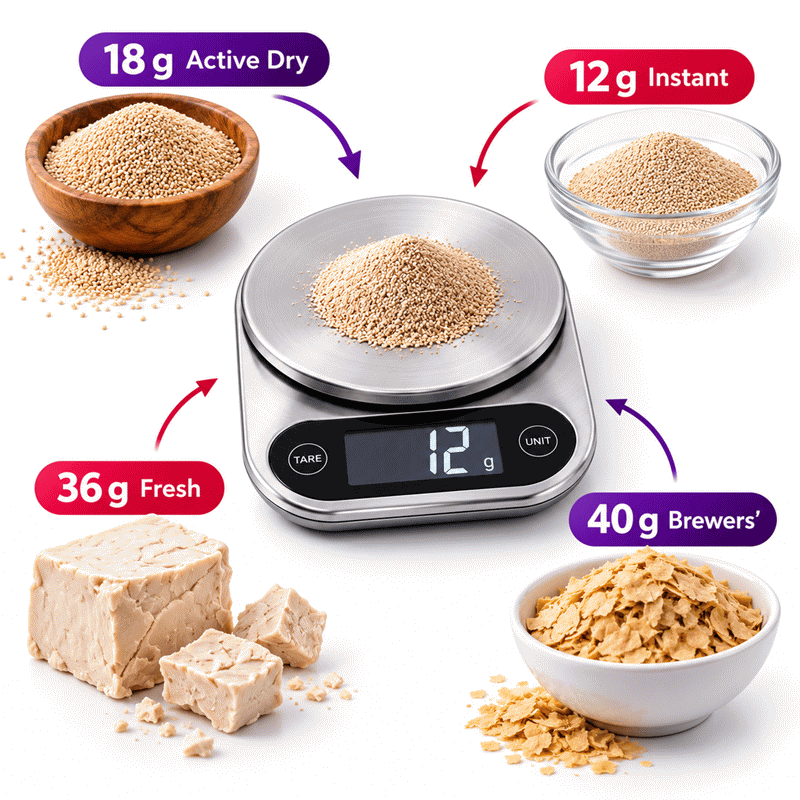
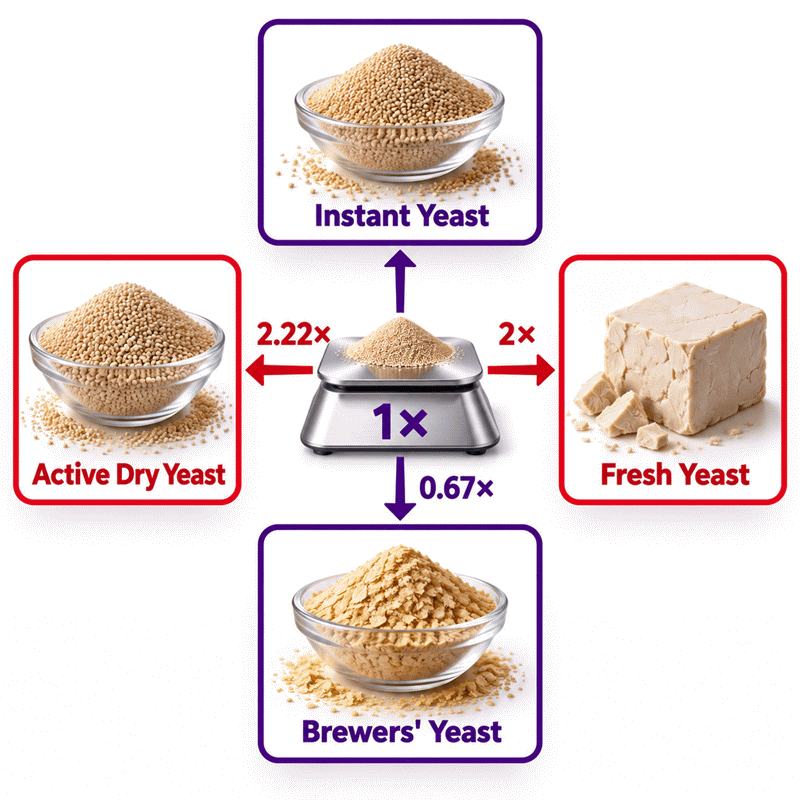
- Active dry yeast is the reference equivalence factor.
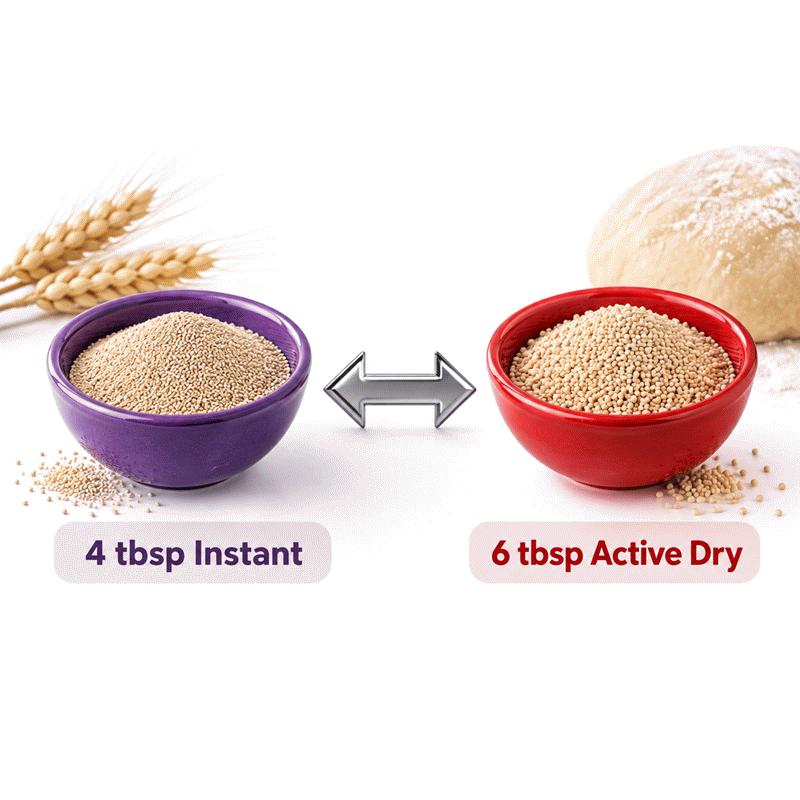
- Instant yeast requires two-thirds of the active dry quantity.
- Fresh compressed yeast requires twice the active dry quantity.
- Brewers’ yeast requires active dry quantity divided by 0.45.
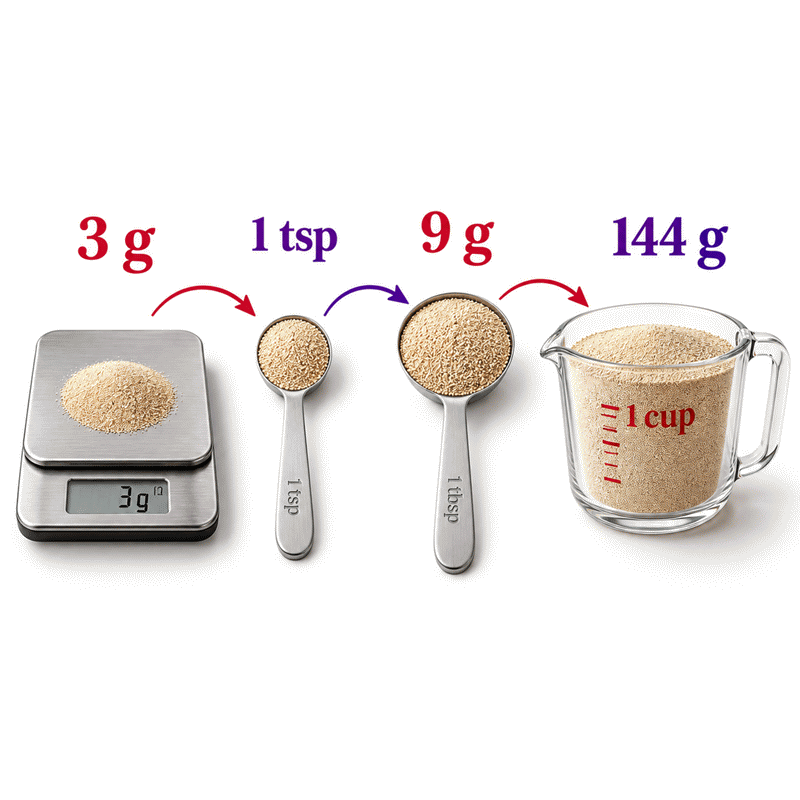
- Three grams of yeast approximates one level teaspoon.
- One tablespoon equals three level teaspoons.
- One customary cup equals sixteen level tablespoons.
- Weight measurements are more reliable than kitchen volume measurements.
- Results estimate substitution quantity, not fermentation speed or proofing time.
- Brand strength and moisture differences may change practical dough performance.
- Commercial production requires manufacturer guidance and controlled validation tests.
Results are rounded for display.
Internal calculations use full precision.
Formulas Used in Yeast Converter :
Normalize the source quantity
Apply the yeast substitution ratio
Convert to the selected output unit
Reverse calculation
Variables and fixed factors
- Qs: source yeast quantity in the selected source unit.
- Qn: source quantity normalized to grams.
- Qt,n: target yeast quantity normalized to grams.
- Qt: target quantity in the selected output unit.
- Cs: grams represented by one source unit.
- Ct: grams represented by one target unit.
- Fs: source yeast factor.
- Ft: target yeast factor.
- Active dry factor: 1.
- Instant factor: 2 ÷ 3.
- Compressed fresh baker's factor: 2.
- Brewers' factor: 20 ÷ 9.
Variables & Definitions
View a complete list of all variables used in this calculator, including definitions and units
Yeast Converter Variables and Calculation Factors
| Variable | Meaning | Unit | Accepted Value | Role |
|---|---|---|---|---|
| Qs | Source yeast quantity | Selected source unit | Finite value greater than zero | User-entered forward value |
| Qn | Normalized source quantity | g | Calculated positive value | Common unit-conversion basis |
| Qt,n | Normalized target quantity | g | Calculated positive value | Yeast-ratio result |
| Qt | Target yeast quantity | Selected target unit | Finite value greater than zero | Editable result or reverse input |
| Cs | Source unit conversion factor | g per source unit | Supported unit factor | Converts source units to grams |
| Ct | Target unit conversion factor | g per target unit | Supported unit factor | Converts grams to target units |
| Fs | Source yeast equivalence factor | Dimensionless | 2 ÷ 3 to 20 ÷ 9 | Identifies source yeast strength |
| Ft | Target yeast equivalence factor | Dimensionless | 2 ÷ 3 to 20 ÷ 9 | Identifies target yeast strength |
Unit Conversion Table
Yeast Converter Unit Conversion Table
| Unit Group | Unit Name | Symbol | Equivalent in Grams | Conversion Type | Common Use |
|---|---|---|---|---|---|
| Popular Units | Gram | g | 1 g | Exact | Primary yeast weight measurement |
| Popular Units | Ounce | oz | 28.349523125 g | Exact | Yeast packets and US recipe weights |
| Popular Units | Pound | lb | 453.59237 g | Exact | Bulk and commercial yeast quantities |
| Kitchen Volume Units | Teaspoon | tsp | Approximately 3 g | Approximate | Small household yeast quantities |
| Kitchen Volume Units | Tablespoon | tbsp | Approximately 9 g | Approximate | Larger household yeast quantities |
| Kitchen Volume Units | US Customary Cup | cup | Approximately 144 g | Approximate | Bulk kitchen volume measurement |
| Scientific Units | Kilogram | kg | 1,000 g | Exact | Commercial and production-scale quantities |
| Scientific Units | Milligram | mg | 0.001 g | Exact | Laboratory-scale yeast quantities |
Example Calculation
The source and target measurements both use grams, so no additional unit conversion is required.
The instant yeast factor is two-thirds of the active dry yeast factor.
The calculator applies the ratio before formatting the final value.
The result is displayed without unnecessary trailing zeros.
The editable result field becomes the known value in reverse-solving mode.
Both quantities use tablespoons, so their unit factors cancel.
The inverse yeast ratio converts instant yeast back to active dry yeast.
Changing the known result recalculates the missing source quantity immediately.
Results are rounded for display.
Internal calculations use full precision.
Calculations Disclaimer
Which Yeast Type Solves Your Recipe Problem?
A recipe asks for fresh yeast, but only instant yeast sits in your cupboard. That small mismatch can change the rise, schedule, and flavor of the dough. A Yeast Converter removes the guesswork by matching the available yeast with the recipe requirement. The Yeast Converter supports active dry, instant, compressed fresh baker’s yeast, and brewers’ yeast. It also lets you work with familiar kitchen and weight units.
Start with the yeast named in the recipe. Then select the yeast you actually have. Enter the known amount on either side. The other field updates at once. This two-way design matters when you know the substitute amount but need to recover the original recipe quantity. It also prevents repeated manual calculations during recipe scaling.
The most important decision is the yeast type. Active dry and instant yeast look similar, but they do not always perform at the same speed. Fresh compressed yeast contains more moisture and needs a larger quantity. Brewers’ yeast may not behave like baking yeast unless the product is active and intended for fermentation. Nutritional yeast is inactive and cannot raise bread.
Use the result as a practical substitution starting point. Then check the label. Product strength, storage, dough temperature, sugar, salt, and fermentation time can change the real outcome. For repeatable baking, weigh yeast and record the result that worked in your kitchen.
Active Dry or Instant: Which One Should You Choose?
Your dough must be ready on time, yet the recipe gives a yeast type you do not own. Active dry yeast offers reliable fermentation and is widely available. Instant yeast has smaller granules and usually begins working faster. It can normally be blended directly with flour. Active dry yeast may be rehydrated first, depending on the product instructions.
Choose instant yeast when you want a simple mixing process. Choose active dry yeast when the recipe already includes a blooming step or when that product is easier to obtain. Neither choice guarantees better bread. Dough development, fermentation control, and yeast freshness matter more than the name alone.
When Instant Yeast Saves Time
Instant yeast reduces preparation steps because it usually enters the bowl with the dry ingredients. This is useful for weeknight pizza, sandwich bread, rolls, and automated bread machines. Its quick start does not mean the dough should be rushed. Watch dough expansion instead of following the clock blindly. A warm kitchen can shorten the rise, while a cool room can extend it.
When Active Dry Yeast Offers Better Control
Active dry yeast can provide a slightly slower start. Some bakers value that pace because it makes timing easier. Rehydration also gives you a chance to check whether an older packet still shows activity. Modern products vary, so the package directions take priority over a general habit.
Why Fresh Yeast Can Surprise Experienced Bakers
A fresh yeast cube feels substantial, so a smaller dry replacement can look wrong. The difference comes mainly from moisture and concentration. Fresh compressed yeast contains far more water than dry products. A larger fresh weight can therefore deliver a similar practical leavening effect.
Fresh yeast also needs careful storage. Heat, air exposure, age, and contamination can weaken it. A pale, moist, crumbly block is easier to work with than a dark, dry, or damaged piece. Never assume that extra quantity will repair yeast with poor viability. Replacing a failed product is safer than risking an entire batch.
Why Weight Beats a Spoon for Fresh Yeast
Fresh yeast compresses inside a spoon. One baker may scoop it loosely while another packs it firmly. Both can call the result one tablespoon, although the weights differ. A digital scale avoids that uncertainty. This becomes critical when scaling enriched dough, long fermentation, or a large production batch.
How to Add Fresh Yeast to Dough
Crumble fresh yeast evenly or disperse it in suitable liquid. Avoid direct prolonged contact with concentrated salt. Keep liquid temperature appropriate for the product and recipe. Very hot liquid can damage living cells. Very cold dough may simply need more time, but it can also expose a weak fermentation plan.
Why the Same Conversion Can Produce Different Dough
You followed the conversion, but today the dough moves faster. A yeast quantity never works alone. Flour temperature, water temperature, room conditions, hydration, mixing energy, salt, sugar, fat, and fermentation length form one connected system. Changing one part can make the same yeast amount feel stronger or weaker.
Temperature Changes the Clock
Warm dough usually ferments faster. Cold dough usually ferments more slowly. This does not change the converter’s type relationship. It changes the time needed to reach the desired dough development. Record final dough temperature when consistency matters. It explains many differences that users wrongly blame on the conversion.
Sugar and Fat Can Slow Ordinary Yeast
Rich dough creates a demanding environment. High sugar levels draw water away from yeast cells. Fat can slow hydration and dough development. Sweet breads may need a yeast designed for high-sugar formulas. Simply increasing ordinary yeast may create flavor and timing problems.
Salt Controls More Than Taste
Salt supports dough structure and moderates fermentation. Too little can produce weak flavor and rapid activity. Too much can slow the rise. Keep salt consistent when comparing two yeast types. Otherwise, you are testing several variables at once.
What Should You Check When Dough Does Not Rise?
The converted amount looks correct, but the dough remains still. Begin with the yeast, not another calculation. Check the expiration date and storage conditions. Open dry yeast should stay sealed against moisture and air. Fresh yeast requires refrigeration and has a short useful life.
Next, review the liquid temperature. Excess heat can damage yeast. Very cold ingredients can delay visible activity. Then check whether salt contacted the yeast directly for a long period. Inspect the recipe for heavy sugar, fat, or acidity. Finally, allow for room temperature. A winter kitchen may need much more time than a warm summer kitchen.
A Fast Diagnostic Sequence
Confirm the selected yeast type. Confirm the amount and unit. Check product age. Review storage. Verify liquid temperature. Confirm salt and sugar quantities. Inspect dough temperature. Give the dough suitable time. This sequence isolates the likely cause without randomly adding more yeast.
When Starting Again Is the Better Choice
Restart when the yeast shows no activity, smells abnormal, or appears contaminated. Restart if liquid was clearly overheated. Adding fresh yeast to a damaged dough can create uneven fermentation. Saving ingredients matters, but protecting the final product matters more.
How Should You Scale Yeast for a Larger Batch?
A home recipe works, but multiplying every ingredient can push fermentation off schedule. Begin by scaling yeast in the same proportion as flour. Keep every weight in one system. Avoid switching between teaspoons, packets, and grams during the same calculation. Grams reduce accumulated measuring error.
A larger dough mass also retains heat differently. Mixing can raise dough temperature. Production equipment changes oxygen exposure and development. The converted yeast amount is only the starting point. A test batch confirms whether the planned fermentation window still works.
Why Batch Records Protect Quality
Record yeast brand, lot, opening date, quantity, dough temperature, room temperature, proofing time, and final result. These notes turn a successful batch into a repeatable process. They also reveal whether a future failure came from conversion, storage, temperature, or handling.
Commercial Baking Needs a Controlled Trial
Commercial users should compare the calculated amount with supplier guidance. Validate the change under actual mixing, resting, shaping, proofing, and baking conditions. Confirm texture, volume, flavor, timing, and shelf behavior before releasing a new formula.
How Can You Avoid the Most Expensive Yeast Mistakes?
The first mistake is choosing the wrong product category. Nutritional yeast does not replace active baker’s yeast. Some brewers’ yeast products are inactive or intended as supplements. Read the label before entering the product into a baking conversion.
The second mistake is trusting package names without checking weight. A packet is not a universal unit. Different markets and manufacturers may use different sizes. Enter the printed net weight whenever possible.
The third mistake is measuring fresh yeast by volume. Its moisture and compressibility make spoon measurements unreliable. The fourth mistake is changing yeast type and fermentation time together. That removes your ability to identify the cause of a different result.
The fifth mistake is treating the displayed number as a guarantee. Yeast is biological. Storage and dough conditions matter. A good converter gives a consistent starting value. A good baker observes the dough and adjusts the schedule.
Which Yeast Choice Fits Your Baking Schedule?
You need bread today. Instant yeast offers simple mixing and a quick start. You want a traditional process and own active dry yeast. Follow its label and allow suitable time. You have fresh yeast from a bakery supplier. Weigh it, store it carefully, and use it while active.
For an overnight cold ferment, reduce the total yeast according to the recipe design. Do not use a same-day quantity without considering the longer time. For sweet enriched dough, consider a product intended for osmotic stress. For repeated production, use the same brand and record the batch conditions.
Choose by Process, Not by Marketing
The best yeast is the one that fits the dough, schedule, storage system, and mixing method. Premium packaging cannot rescue poor storage. A familiar product with controlled handling often provides better consistency than an unfamiliar product chosen only for speed.
Read the Dough Instead of the Timer
A recipe time is a guide. Look for expansion, elasticity, gas retention, and readiness for the next stage. Temperature changes every schedule. The converted amount supports the process, but observation finishes the job.
How Does AxiCalculator Support a Safer Decision?
AxiCalculator places the conversion task first. You select the source type, target type, amount, and unit. The result updates immediately. You can edit either quantity, which makes reverse checking fast. Reset clears the current state, while sharing preserves the values needed to reproduce the calculation.
The clear layout helps home bakers, culinary students, recipe developers, and production teams avoid mental arithmetic. Each selection remains visible. This reduces the chance of confusing a yeast ratio with a measurement conversion.
A useful result should also travel. PDF export supports kitchen records and approvals. Spreadsheet export supports batch planning and further checks. A shareable link helps another person review the same selections without copying numbers manually.
Use the tool before changing a recipe, then validate the dough under real conditions. That combination offers speed without hiding practical uncertainty. Save the successful result with your recipe so the next batch starts from evidence rather than memory.
How Should You Record a Successful Yeast Substitution?
A successful loaf can still be difficult to repeat. Memory rarely preserves every useful condition. Create a short batch record after each meaningful yeast change. Note the recipe name, flour weight, yeast type, yeast brand, and exact yeast weight. Add the opening date from the package. Record water temperature, room temperature, and final dough temperature when possible. These details show whether the conversion or the environment changed.
Write down the start and end of bulk fermentation. Record the proofing duration and the visual signs used to finish each stage. Include the baked volume, crumb, flavor, crust, and any unwanted yeast aroma. A phone photograph can support the written record. Keep the same observation method across tests. Consistent notes are more useful than long notes written differently each time.
Change One Important Variable at a Time
A test becomes confusing when yeast type, quantity, hydration, temperature, and flour all change together. Hold the established recipe steady. Change only the yeast substitution first. This makes the result easier to interpret. If timing needs adjustment, change it during the next controlled test. Small steps may feel slower, but they prevent repeated failures.
Use the Result to Improve Future Decisions
Compare two or three recorded batches before declaring one conversion ideal. Biological ingredients naturally vary. A single excellent loaf may reflect warmer dough or fresher yeast. Repeated results provide stronger evidence. Store the chosen quantity beside the recipe and identify the exact product. Review the note whenever the brand, package format, or fermentation schedule changes.
What Makes a Yeast Conversion Trustworthy?
A trustworthy conversion shows its scope. It identifies supported yeast types and keeps units visible. It avoids presenting inactive yeast as a leavening substitute. It does not hide practical variation behind excessive decimal places. Most importantly, it produces the same answer when a conversion is reversed.
Trust also comes from honest limits. A calculated equivalent cannot inspect yeast viability. It cannot measure dough temperature or predict every fermentation schedule. Those limits do not make the tool weak. They show users where calculation ends and practical observation begins. A clear boundary helps home bakers and professionals make safer decisions.
AxiCalculator supports that decision with a focused workflow. The user supplies the known information. The tool returns a consistent result. The baker then checks product instructions and real dough behavior. This partnership between calculation and observation is more dependable than either approach alone.
Frequently Asked Questions
Can the same converted yeast amount work in every bread recipe?
Why should I enter packet weight instead of selecting one packet?
Can nutritional yeast replace instant or active dry yeast?
What should I do when the converted yeast produces a slow rise?
How should a bakery validate a converted commercial formula?
Why can fresh yeast volume measurements create unstable results?
How can I troubleshoot conflicting professional conversion ratios?
Our engineers are here to help you get it right.