Grams to Teaspoons Calculator
- Last formula update:

Decimal & Rounding Policy
- Calculations use full-precision values without rounding intermediate results.
- Displayed results are limited to ten significant digits for readability.
- Trailing zeros are removed unless they clarify the entered measurement.
- Metric teaspoons use 5 mL, while US teaspoons use 4.92892159375 mL.
- Ingredient density values are approximate and may affect the final precision.
- Rounding is applied only to the displayed result, never to the calculation engine.
Valid range
- Mass, spoon volume, and custom density must be finite numbers greater than zero.
- Supported numerical values range from more than 0 to 1,000,000,000,000,000.
- A valid ingredient and applicable ingredient type must be selected before calculation.
- Custom ingredient density must be entered using a compatible mass-per-volume unit.
- Zero, negative, nonnumeric, infinite, incompatible, and unsupported values are rejected.

Nolissa Vantford
Reviewers:
Solavyn Marbourne
Orvick Bexquell
Check our editorial policy
September 8, 2026
1.0.0
Initial calculator and formula release.
Our engineers are here to help you get it right.
How Does the Grams to Teaspoons Converter Give an Accurate Result?
Grams to Teaspoons Converter results depend on the selected ingredient because grams measure mass while teaspoons measure volume. The calculator connects them through ingredient density, then converts the answer into the selected metric or US spoon unit.
- Select the exact ingredient and subtype before entering a value.
- Enter mass for a forward calculation or spoons for reverse solving.
- A metric teaspoon equals 5 mL.
- A US teaspoon equals 4.92892159375 mL.
- Granulated, powdered, and brown sugar require different conversion values.
- Custom density supports ingredients outside the preset list.
- Changing a unit preserves the underlying physical quantity.
- Level spoons provide more repeatable results than heaped spoons.
The Grams to Teaspoons Converter is designed for recipe planning and everyday cooking. Density can change with packing, moisture, temperature, and brand. Use a calibrated scale for precision-critical preparation, nutrition, commercial production, laboratory work, or controlled dosing.
Assumptions used in this calculator
- All entered measurements represent positive and finite numerical values.
- Metric teaspoons contain exactly 5 milliliters for calculator purposes.
- US teaspoons contain exactly 4.92892159375 milliliters.
- Metric tablespoons contain exactly 15 milliliters.
- US tablespoons contain exactly 14.78676478125 milliliters.
- Ingredient density remains constant throughout each calculation.
- Preset densities represent approximate level-spoon kitchen measurements.
- Spoons are level unless the user applies another measurement method.
- Ingredients are not unusually compressed, aerated, melted, or frozen.
- Moisture and temperature effects on density are not calculated.
- Custom density accurately represents the ingredient and its current condition.
- Intermediate values retain full precision until the displayed result.
- Precision-critical applications require calibrated mass and volume instruments.
Results are rounded for display.
Internal calculations use full precision.
Formulas Used in Grams to Teaspoons Calculator :
Convert the Selected Units to Base Units
Convert Mass to Spoon Volume
Reverse Calculation from Spoons to Mass
Variables
- min is the mass entered in the selected mass unit.
- mg is mass converted to grams.
- Sin is the entered spoon or volume quantity.
- S is the result in the selected spoon unit.
- VmL is volume expressed in milliliters.
- ρin is the entered custom density.
- ρg/mL is ingredient density in grams per milliliter.
- Fm is the selected mass-to-gram conversion factor.
- Fv is milliliters per selected spoon or volume unit.
- Fρ is the selected density-to-grams-per-milliliter factor.
Variables & Definitions
View a complete list of all variables used in this calculator, including definitions and units
Grams to Teaspoons Calculator Variables and Measurement Definitions
| Variable | Name | Base Unit | Role | Valid Condition |
|---|---|---|---|---|
| min | Entered mass | Selected mass unit | User-entered mass value | Finite and greater than zero |
| mg | Base mass | g | Mass converted to grams | Finite and greater than zero |
| Sin | Entered spoon quantity | Selected volume unit | Editable reverse-calculation value | Finite and greater than zero |
| S | Spoon result | tsp, US tsp, tbsp, or US tbsp | Converted spoon quantity | Finite and greater than zero |
| VmL | Base volume | mL | Volume expressed in milliliters | Finite and greater than zero |
| ρin | Entered density | Selected density unit | Custom ingredient density | Finite and greater than zero |
| ρg/mL | Base density | g/mL | Connects mass and volume | Ingredient-specific positive value |
| Fm | Mass conversion factor | g per selected unit | Converts entered mass to grams | Compatible mass unit only |
| Fv | Volume conversion factor | mL per selected unit | Converts spoons to milliliters | Compatible spoon or volume unit only |
| Fρ | Density conversion factor | g/mL per selected unit | Normalizes custom density | Compatible density unit only |
Unit Conversion Table
Mass Unit Conversions Used by the Calculator
| Unit Group | Unit Name | Symbol | Equivalent in Grams | Used For |
|---|---|---|---|---|
| Popular Units | Milligram | mg | 0.001 g | Small ingredient quantities |
| Popular Units | Gram | g | 1 g | Standard recipe measurements |
| Popular Units | Kilogram | kg | 1,000 g | Bulk ingredient quantities |
| Popular Units | Ounce | oz | 28.349523125 g | US customary recipes |
| Popular Units | Pound | lb | 453.59237 g | Large US customary quantities |
| Scientific Units | Microgram | µg | 0.000001 g | Very small measured quantities |
Spoon and Volume Unit Conversions Used by the Calculator
| Unit Group | Unit Name | Symbol | Equivalent in Milliliters | Used For |
|---|---|---|---|---|
| Popular Units | Metric Teaspoon | tsp | 5 mL | Metric cooking measurements |
| Popular Units | US Teaspoon | US tsp | 4.92892159375 mL | US customary cooking measurements |
| Popular Units | Metric Tablespoon | tbsp | 15 mL | Larger metric spoon quantities |
| Popular Units | US Tablespoon | US tbsp | 14.78676478125 mL | Larger US spoon quantities |
| Scientific Units | Milliliter | mL | 1 mL | Base volume calculations |
| Scientific Units | Liter | L | 1,000 mL | Large liquid volumes |
Density Unit Conversions Used by the Calculator
| Unit Group | Unit Name | Symbol | Equivalent in g/mL | Used For |
|---|---|---|---|---|
| Popular Units | Gram per Milliliter | g/mL | 1 g/mL | Standard ingredient density |
| Popular Units | Gram per Metric Teaspoon | g/tsp | 0.2 g/mL | Kitchen density references |
| Scientific Units | Kilogram per Cubic Meter | kg/m³ | 0.001 g/mL | Scientific density specifications |
Example Calculation
The calculation uses the approximate mass of one level metric teaspoon of powdered sugar. Dividing the entered mass by 2.8 grams per teaspoon produces the spoon quantity. Intermediate values remain unrounded, and only the displayed result is formatted. Actual kitchen measurements can vary with compaction and moisture.
The editable spoon value becomes the known quantity in reverse mode. Multiplying it by the approximate mass contained in one level teaspoon produces the corresponding mass. The unit terms cancel correctly, leaving grams as the result. Brand, temperature, and oil composition may cause small practical differences.
Results are rounded for display.
Internal calculations use full precision.
Calculations Disclaimer
Why Does the Same Weight Fill a Different Number of Teaspoons?
A recipe asks for eight grams of an ingredient. Your scale is missing. You reach for a teaspoon, but one question stops you: how many spoons should you use? The answer changes with the ingredient. Grams measure mass. Teaspoons measure volume. Density connects them. Water, salt, sugar, cocoa, yeast, and oil do not pack the same mass into the same space.
The Grams to Teaspoons Converter removes that guesswork. Select the ingredient. Enter the known mass or spoon quantity. Then choose the required unit. The opposite field updates in real time. You can also edit the spoon result to calculate mass in reverse. This two-way workflow supports recipe checks, scaling, ingredient swaps, and quick kitchen planning.
A level metric teaspoon has a nominal volume of 5 mL. A US customary teaspoon equals 4.92892159375 mL. That small difference rarely ruins a home recipe. It can matter across many servings or in a tightly controlled formula. The tool keeps these standards separate, so the chosen unit remains visible.
Density Is the Missing Link
Imagine two level teaspoons. One holds fine salt. The other holds cocoa powder. Their volumes match, but their masses do not. Salt particles pack tightly. Cocoa can retain more air. A direct rule such as “one teaspoon equals five grams” therefore fails for many foods.
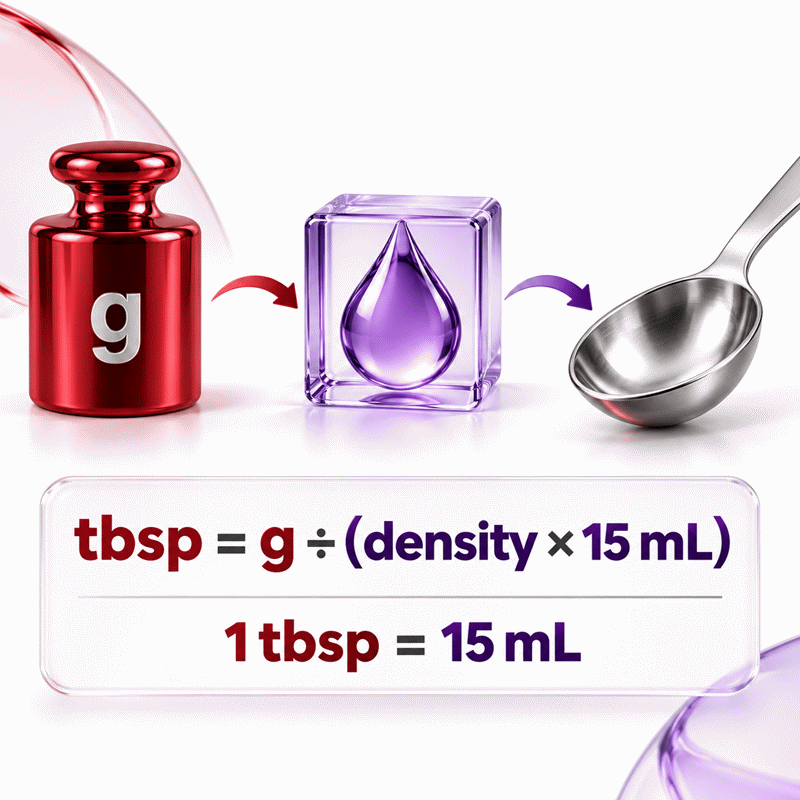
Density describes mass per unit of volume. Once density is known, the conversion becomes reliable within the limits of kitchen measurement. The calculator stores practical reference values for common ingredients. It also accepts custom density when your ingredient is not listed.
Preparation still matters. Scooping can compress a powder. Sifting can loosen it. Humidity can add water. Temperature can change liquid density. A level spoon also differs from a rounded or heaped spoon. Use the result as a practical recipe estimate. Use a calibrated scale when exact repeatability matters.
How Do You Get a Reliable Result in Seconds?
Start by choosing the ingredient. Do not enter a generic mass first and assume the same spoon result applies to every food. If sugar is selected, choose granulated, powdered, or brown sugar. If oil is selected, choose the available oil type. These choices change the mass assigned to one teaspoon.
Next, enter the known value. Enter mass when the recipe gives grams, milligrams, kilograms, ounces, or pounds. Enter spoon volume when you need the reverse result. The last valid field you edit becomes the known side. This prevents a separate mode switch and keeps the form compact.
Finally, verify the unit shown beside each value. A number without a unit is incomplete. Ten grams is not ten milligrams. One metric teaspoon is not mathematically identical to one US teaspoon. The converter preserves the underlying physical quantity when you change units.
Forward Conversion for Everyday Cooking
Suppose a recipe lists 8.4 grams of granulated sugar. The reference value is about 4.2 grams per level metric teaspoon. Dividing 8.4 by 4.2 gives 2 teaspoons. The result is fast, but the ingredient choice is what makes it meaningful.
The same 8.4 grams of powdered sugar produces a different volume. At about 2.8 grams per level teaspoon, it fills 3 teaspoons. Nothing is wrong with either result. Powdered sugar simply occupies more spoon volume for the same mass.
Reverse Conversion When the Spoon Quantity Is Known
You may have the opposite problem. A recipe gives 3 teaspoons of olive oil, but you want to weigh it. Using approximately 4.6 grams per metric teaspoon, the mass is 13.8 grams. Entering the spoon quantity in the editable result field returns that mass automatically.
Reverse solving is useful when standardizing a recipe. A cook can first measure a spoon quantity, record its estimated mass, and then use a scale during later batches. This creates a more repeatable workflow without forcing every reader to use the same equipment.
Why Do Sugar, Salt, Yeast, and Cocoa Need Separate Values?
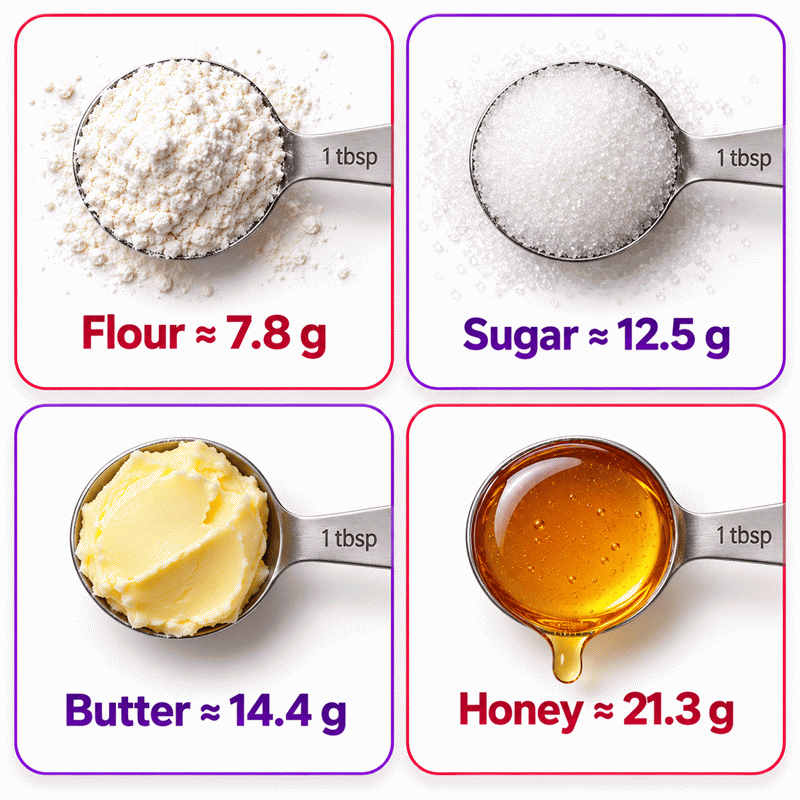
The largest conversion mistake is treating foods as if they share one density. A level metric teaspoon of water is about 5 grams. A level teaspoon of salt is commonly estimated near 6 grams. Granulated sugar is near 4.2 grams, while powdered sugar is closer to 2.8 grams. Cocoa is lighter still at roughly 2.6 grams per teaspoon.
Yeast deserves care because recipe performance depends on small amounts. Instant dry yeast is often estimated near 3 grams per level teaspoon. A small spoon error can change fermentation speed. When packaging provides a mass, weighing remains the safer choice. The converter is most useful when a scale is unavailable or when a recipe must be translated for easier use.
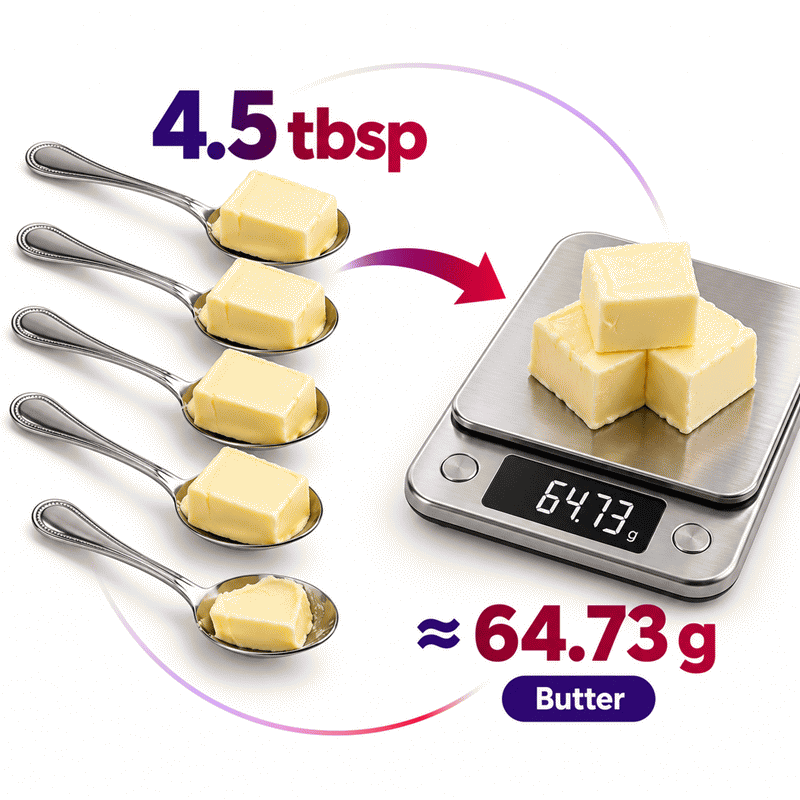
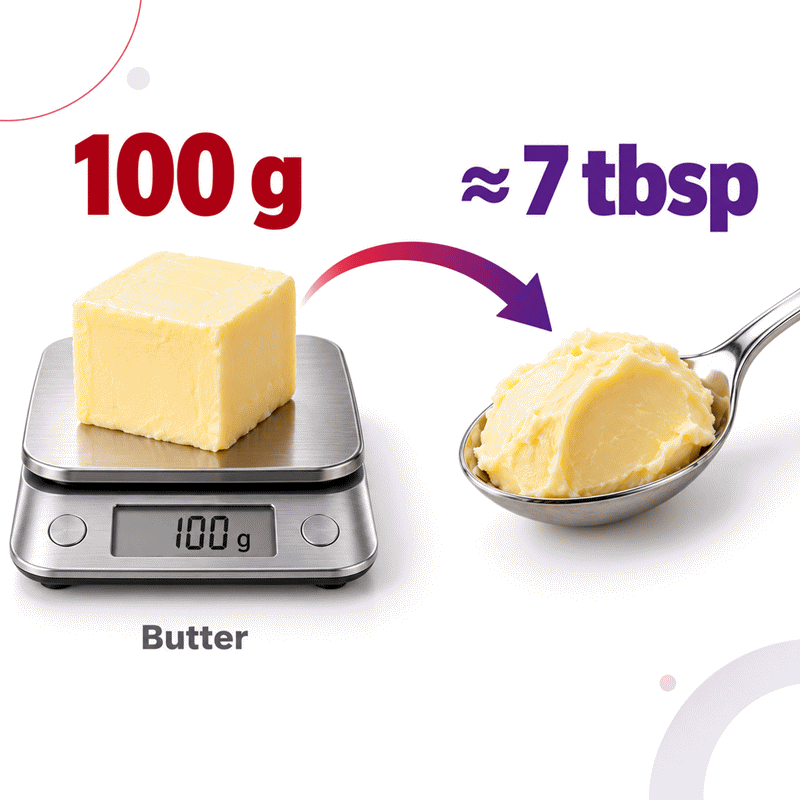
Butter and oil create another challenge. Their condition changes how they occupy a spoon. Softened butter, melted butter, and cold butter may not fill the spoon identically. Oils also vary by composition and temperature. Select the closest listed type and keep the physical state consistent during measurement.
What Changes When You Select a US Teaspoon?
A recipe from another region may use a different spoon convention. The metric cooking teaspoon is treated as 5 mL. The US customary teaspoon is exactly one-third of a US tablespoon and equals 4.92892159375 mL. For one spoon, the difference is only about 0.0711 mL. Across a large batch, the difference accumulates.
Do not infer the standard only from the writer’s location. Nutrition and medicine may use a rounded 5 mL teaspoon even in the United States. Read the recipe notes when available. If no standard is stated, use the convention normally followed by that publication and keep it consistent.
Small Quantities Need Better Measurement Habits
A tiny ingredient quantity can be hard to measure with a large spoon. The surface shape alone can create a meaningful error. Level the spoon with a straight edge. Avoid shaking or pressing powders unless the recipe says “packed.” For very small masses, use a scale with suitable resolution.
The calculator keeps more precision internally than it displays. This prevents early rounding from growing through later steps. Still, extra decimal places do not make an uncertain spoon measurement exact. Precision describes the digits shown. Accuracy describes closeness to the real amount. Both matter, but they are not the same.
How Can You Scale a Recipe Without Losing Consistency?
A small measurement difference grows when a recipe is doubled, tripled, or prepared in a commercial batch. Convert the original amount with the correct ingredient first. Scale the mass rather than repeatedly scaling a rounded spoon result. Then convert the final mass back to spoons only if needed.
For example, a single batch may use 4 grams of baking powder, equal to about one metric teaspoon under the chosen reference. Five batches need 20 grams. Calculating from 20 grams gives 5 teaspoons. This route is clearer than rounding each batch separately.
Save the ingredient type and spoon standard with the recipe. “Two teaspoons sugar” is incomplete for controlled work. “Two level metric teaspoons of granulated sugar, about 8.4 grams” is far easier to repeat.
Using a Custom Ingredient Safely
A custom density expands the tool beyond the preset list. Enter a positive density in a supported mass-per-volume unit. Confirm whether your source describes bulk density, tapped density, or true material density. Kitchen powders usually need a practical bulk value because air remains between particles.
Keep the source conditions close to your real ingredient. A density recorded for a dry powder may not suit a humid or compressed sample. If several reliable values exist, consider the resulting range instead of presenting one estimate as exact.
Which Common Errors Produce the Wrong Spoon Result?
The first error is skipping the ingredient selection. The second is confusing a level spoon with a heaped spoon. The third is choosing the wrong teaspoon standard. Another common error is entering a density in kilograms per cubic meter while treating it as grams per milliliter. Compatible unit conversion must occur before the mass-volume equation is applied.
Users also copy rounded values into further calculations. This can create drift during recipe scaling. Keep the original result when possible. Round once, at the final display or practical measuring step.
Never use a kitchen conversion as a substitute for a controlled dose. Nutrition, laboratory preparation, commercial labeling, and medical tasks may have stricter methods. A food calculator supports decisions; it does not certify a batch.
When Should You Choose a Scale Instead of a Spoon?
Choose a scale when the ingredient strongly affects structure, fermentation, preservation, or safety. Baking powder, yeast, salt, hydrocolloids, and concentrated additives can be sensitive. A scale is also better for repeated batches because mass is less affected by scooping style.
Choose a spoon for speed when the recipe tolerates small variation. Everyday sauces, drinks, and informal cooking often fit this use. The converter helps bridge the two methods. It shows what a mass means in familiar kitchen volume and what a spoon quantity means on a scale.
Build a Repeatable Kitchen Check
A conversion is most useful when another person can repeat it. Begin with a clean, dry spoon. Place the ingredient into the spoon without pressing it unless the recipe asks for a packed measure. Sweep a straight edge across the rim. If a scale is available, weigh several level spoons and calculate their average mass. That average reflects your ingredient, spoon, and technique better than a generic assumption.
Record the ingredient name with enough detail. Granulated sugar and powdered sugar should never share one record. Fine salt and coarse salt may also behave differently. For liquids, record whether the ingredient was warm, chilled, or at room temperature when consistency matters. These notes take seconds but can prevent repeated failures.
When the measured average differs from the preset, use the custom ingredient mode. Divide measured mass by measured volume to obtain a practical density. Enter that value with the matching unit. The calculator can then translate future weights and spoon quantities using conditions closer to your kitchen.
How Can Recipe Developers Use the Result Professionally?
A recipe developer often needs two versions of the same instruction. One version serves readers with a scale. The other serves readers with measuring spoons. Start from the tested mass because it usually offers better repeatability. Convert it into a sensible spoon amount, then verify that volume with the real ingredient. Avoid forcing an awkward result into a neat fraction if the change could affect performance.
For a tolerant ingredient, 1.98 teaspoons may reasonably become 2 level teaspoons. For yeast or a powerful leavening agent, that rounding choice deserves a test batch. The mathematical result is only one part of recipe development. Sensory results, rise, texture, spread, and cooking time can reveal whether the practical instruction works.
Publishing both values also helps international readers. A line such as “8.4 g granulated sugar, approximately 2 level metric teaspoons” states the ingredient, mass, volume, and spoon standard. It is clearer than a bare spoon value and easier to audit when a reader reports a different result.
Use Conversion Ranges When the Ingredient Is Variable
Some ingredients do not have one stable kitchen density. Flour can settle during transport. Brown sugar may be loosely filled or firmly packed. Cocoa can form lumps. In such cases, one result should be treated as a central estimate rather than a physical guarantee.
A practical range can be produced by calculating with a low and high density. Lower density gives more teaspoons for the same mass. Higher density gives fewer teaspoons. This relationship helps users understand why two reputable charts may disagree without either chart being mathematically broken.
If the acceptable recipe window is narrow, stop converting to spoons and retain the mass instruction. This is not a failure of the tool. It is the correct measurement decision. A trustworthy converter should make uncertainty visible instead of hiding it behind excessive decimal places.
What Should You Check Before Sharing or Exporting a Result?
Review four details before saving the conversion. Confirm the ingredient and subtype. Confirm which field was entered as the known value. Confirm the mass unit. Then confirm the spoon standard. A correct equation with one wrong selection still produces the wrong practical instruction.
When sharing a link, open it once and inspect the restored state. The ingredient, values, units, and solving direction should match the original calculation. When exporting a spreadsheet, keep the unit factors and formulas visible. That makes the result easier to review instead of turning it into an unexplained number.
For team use, add a short process note outside the calculator result. State whether the spoon was level, whether a preset or custom density was used, and when the conversion was checked. These details create a useful audit trail for recipe testing, training, and production planning.
Make the Next Conversion with AxiCalculator
Select your ingredient, confirm its type, and enter the value you already know. The result appears immediately. If you want the reverse answer, edit the other field. Check the unit before copying the number, especially when switching between metric and US spoon standards.
AxiCalculator keeps the workflow clear: one ingredient, one known value, one consistent unit system, and one density-aware result. Use it to rescue a recipe, compare measurement systems, or create a repeatable version of a favorite dish.
Frequently Asked Questions
Can I convert grams to teaspoons without choosing an ingredient?
Why does powdered sugar produce more teaspoons than granulated sugar?
Should I select a metric teaspoon or a US teaspoon?
Can the calculator convert teaspoons back into grams?
How should a food technologist enter a custom powder density?
Why can a verified density still disagree with my measured teaspoon?
Is this conversion suitable for nutrition, laboratory, or controlled dosing work?
Our engineers are here to help you get it right.