Dry to Cooked Pasta Converter
- Last formula update:
Decimal & Rounding Policy
- Calculations retain full internal precision until the final displayed result.
- Displayed values use up to six decimal places when additional precision is useful.
- Trailing zeros are removed to keep results clear and readable.
- Very small valid results are displayed without being rounded to zero.
- Reverse calculations use unrounded values to reduce conversion drift.
- Results are estimates because pasta yield varies by shape, brand, and cooking method.
Valid range
- Dry bundle circumference, dry volume, and cooked volume must be finite numbers greater than zero and no greater than 1,000,000,000,000.

Nolissa Vantford
Reviewers:
Solavyn Marbourne
Orvick Bexquell
Check our editorial policy
September 9, 2026
1.0.0
Initial calculator and formula release.
Our engineers are here to help you get it right.
How Does the Dry to Cooked Pasta Converter Plan the Right Amount?
The Dry to Cooked Pasta Converter estimates cooked yield from a dry measurement and works backward from a cooked target. Select a pasta shape, use bundle circumference for long strands or dry volume for short shapes, and enter one known value. The Dry to Cooked Pasta Converter then displays the related quantity for meal planning, recipe scaling, and batch preparation.
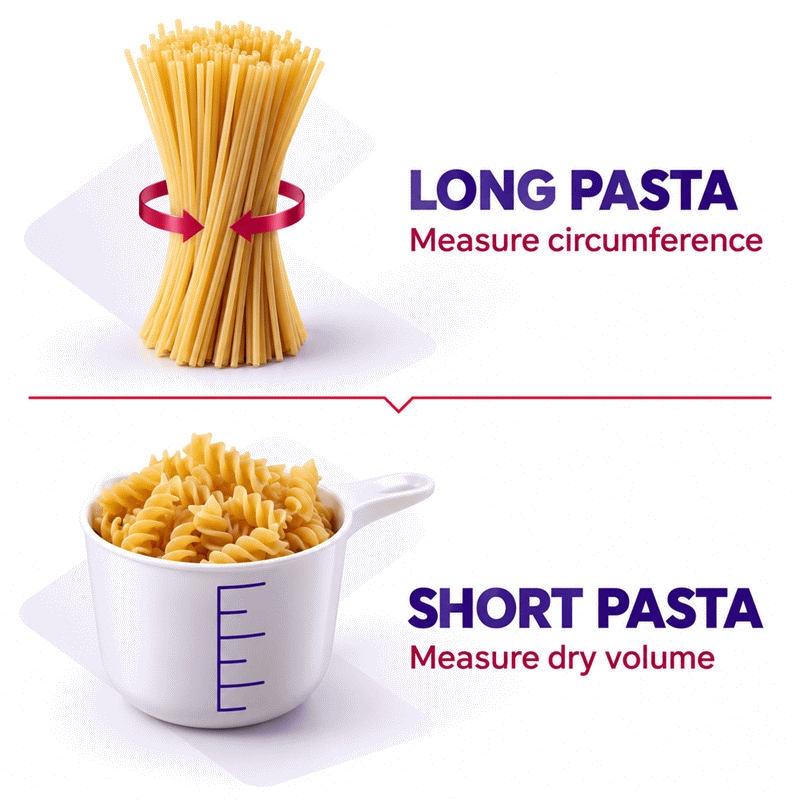
- Long pasta uses dry bundle circumference.
- Short pasta uses shape-specific dry volume.
- The cooked field supports reverse solving.
- Compatible units preserve physical quantity.
- Results describe drained pasta before sauce.
- Brand and doneness can change actual yield.
Use the estimate as a practical starting point. Adjust for appetite and observed kitchen results. Use a calibrated scale when nutrition or production requires weight-based control.
Assumptions used in this calculator
- The selected pasta type accurately represents the pasta being prepared.
- Long pasta is measured using the dry bundle circumference.
- Short pasta is measured using an uncompressed dry volume.
- US customary cups equal exactly 236.5882365 milliliters.
- Pasta is cooked in sufficient water until normally tender.
- Cooked pasta is drained before its final volume is measured.
- No sauce, oil, vegetables, or other ingredients are included.
- Yield factors represent typical cooking behavior rather than guaranteed results.
- Brand differences may change pasta thickness and water absorption.
- Extended cooking generally increases the final absorbed water quantity.
- Cooked volume depends on how tightly pasta fills the container.
- All entered measurements use dimensionally compatible units.
- Results support recipe planning and are not laboratory measurements.
Results are rounded for display.
Internal calculations use full precision.
Formulas Used in Dry to Cooked Pasta Converter :
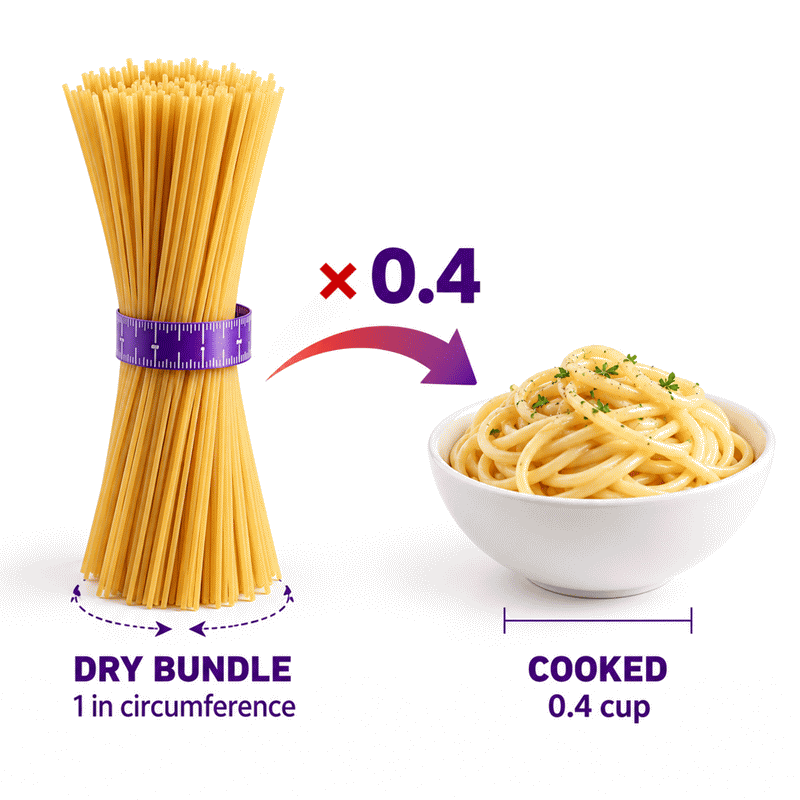
Long Pasta Cooked Volume
- Vc is the cooked pasta volume in US customary cups.
- Cd is the dry bundle circumference in inches.
- kL is the selected long-pasta yield factor in cups per inch.
Short Pasta Cooked Volume
- Vd is the dry short-pasta volume.
- kS is the dimensionless yield factor for the selected shape.
Reverse Solver
- D is the required dry circumference or dry volume.
- k is the applicable yield factor for the selected pasta type.
Unit Conversion
- x is the displayed measurement.
- f is the conversion factor relative to the calculator base unit.
Variables & Definitions
View a complete list of all variables used in this calculator, including definitions and units
Dry to Cooked Pasta Converter Variables and Yield Factors
| Variable | Meaning | Input or Result | Base Unit | Valid Condition |
|---|---|---|---|---|
| Cd | Dry long-pasta bundle circumference | Editable input or reverse result | in | Finite and greater than zero |
| Vd | Dry short-pasta volume | Editable input or reverse result | US customary cup | Finite and greater than zero |
| Vc | Estimated cooked pasta volume | Editable result or reverse input | US customary cup | Finite and greater than zero |
| kL | Yield factor for the selected long-pasta type | Automatically selected constant | cups per inch | Must match the selected pasta type |
| kS | Yield factor for the selected short-pasta shape | Automatically selected constant | Dimensionless | Must match the selected pasta shape |
| D | Required dry measurement calculated in reverse | Calculated result | in or US customary cup | Cooked volume and yield factor must be valid |
| xsource | Measurement expressed in the currently selected unit | Unit-conversion input | Selected unit | Must use a dimensionally compatible unit |
| xtarget | Equivalent measurement in the requested unit | Unit-conversion result | Requested unit | Must preserve the original physical quantity |
| fsource | Source-unit conversion factor | Internal constant | Base-unit factor | Must match the source dimension |
| ftarget | Target-unit conversion factor | Internal constant | Base-unit factor | Must match the target dimension |
Unit Conversion Table
Circumference Unit Conversion Table
| Unit Group | Unit Name | Symbol | Equivalent in Inches | Used For |
|---|---|---|---|---|
| Popular Units | Inch | in | 1 in | Long-pasta bundle circumference |
| Popular Units | Centimeter | cm | 0.3937007874 in | Metric bundle measurement |
| Scientific Units | Millimeter | mm | 0.03937007874 in | Fine metric bundle measurement |
Volume Unit Conversion Table
| Unit Group | Unit Name | Symbol | Equivalent in US Cups | Used For |
|---|---|---|---|---|
| Popular Units | US Customary Cup | cups | 1 cup | Dry and cooked pasta volume |
| Popular Units | Milliliter | mL | 0.00422675284 cups | Small metric kitchen volumes |
| Popular Units | Liter | L | 4.2267528377 cups | Large metric pasta volumes |
| Popular Units | US Fluid Ounce | fl oz | 0.125 cups | US recipe volume measurement |
| Popular Units | UK Pint | UK pt | 2.40190084 cups | British recipe volume measurement |
| Scientific Units | Cubic Centimeter | cm³ | 0.00422675284 cups | Metric volume calculations |
| Scientific Units | Cubic Inch | cu in | 0.0692640693 cups | Imperial volume calculations |
| Scientific Units | Centiliter | cL | 0.0422675284 cups | Metric cooking measurements |
Example Calculation
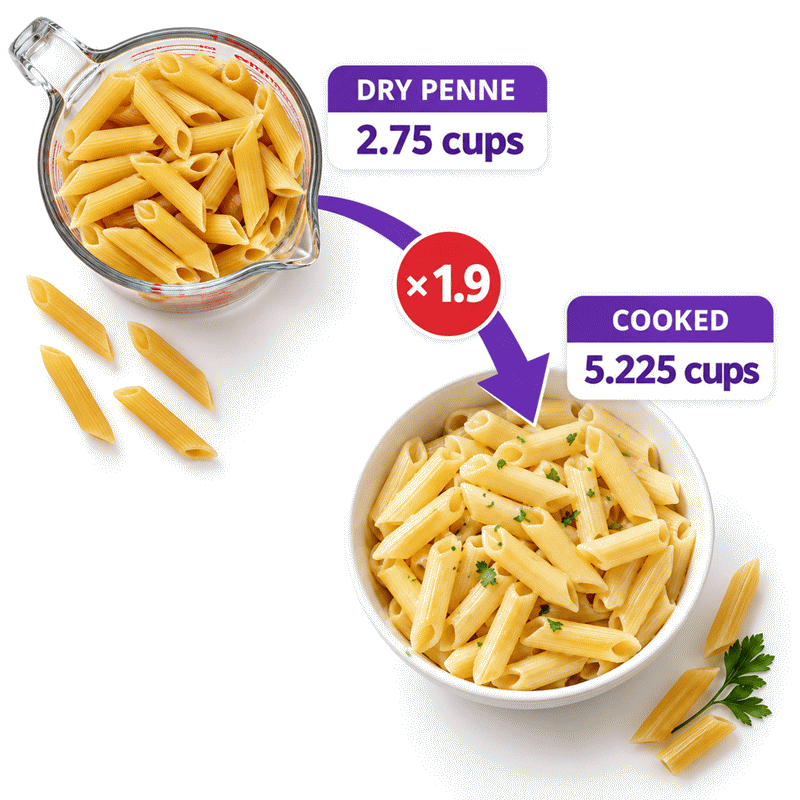
A dry volume of 2.75 cups of penne is estimated to produce 5.225 cups after cooking. The calculation multiplies the dry volume by the penne yield factor of 1.9. No intermediate rounding is applied. Actual yield may vary with brand, cooking time, draining, and cup-filling method.
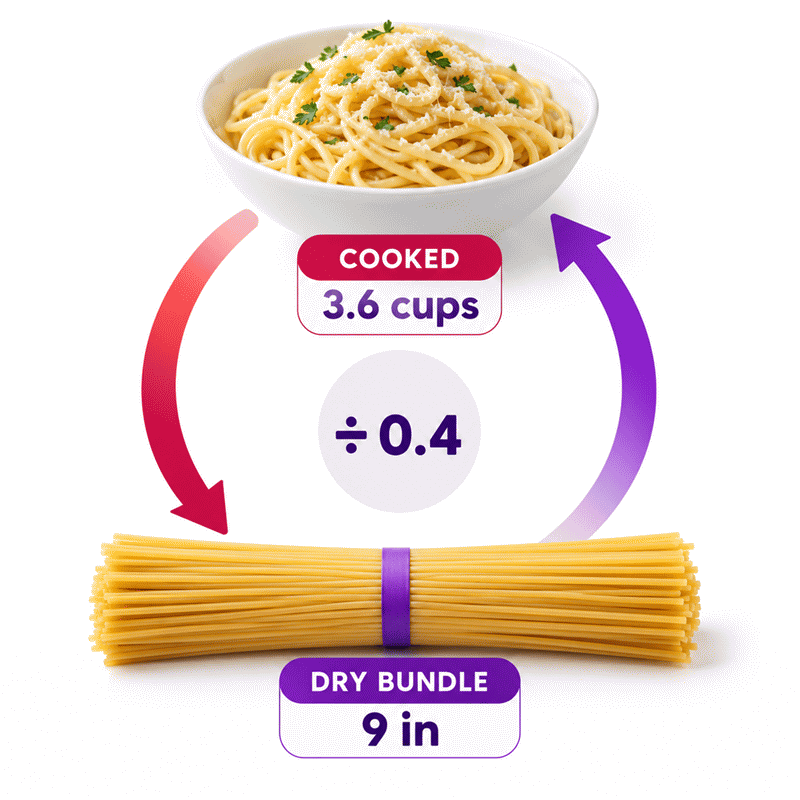
To prepare approximately 3.6 cups of cooked spaghetti, the dry bundle should measure 9 inches around its circumference. The reverse solver divides the desired cooked volume by the spaghetti yield factor. Unit dimensions cancel correctly, leaving the circumference in inches. The result remains an estimate because real pasta absorption varies.
Results are rounded for display.
Internal calculations use full precision.
Calculations Disclaimer
How Much Cooked Pasta Will Your Dry Pasta Make?
A recipe asks for cooked pasta, but the package contains a dry product. That mismatch can create a planning error. The Dry to Cooked Pasta Converter solves this problem in seconds. Choose the pasta family and exact shape. Long pasta uses bundle circumference. Short pasta uses dry volume. Enter one known value. The related value appears at once. You can also enter a cooked target and calculate backward.
Shape matters because pasta does not occupy space uniformly. Penne has hollow centers. Rotini creates spiral gaps. Orzo packs densely. Spaghetti cannot be measured consistently in a dry cup. A shape-aware estimate is more useful than one broad multiplier.
The answer remains an estimate. Brand, thickness, cooking time, draining, and cup filling affect real yield. Use it as a practical starting point. Record your actual result when a recipe is repeated.
Choose the Right Measurement Path Before You Start
The most common mistake occurs before calculation. Users measure the wrong property. A spaghetti bundle has no stable dry cup volume. Macaroni has no useful bundle circumference. The calculator separates these cases.
When Long Pasta Requires Bundle Circumference
Gather the strands into a natural bundle. Wrap flexible tape or string around it. Do not squeeze. Enter the circumference and unit. This method suits spaghetti, linguini, fettuccine, angel hair, and related strands.
When Short Pasta Requires Dry Cup Volume
Pour short pasta into a rigid dry measure. Let it settle naturally. Do not press the pieces. Level the top, choose the closest shape, and enter the volume.
Why Pasta Shape Changes the Result
Two equal-looking dry portions can create different cooked volumes. Shape controls empty space. Thickness affects hydration. Surface area changes cooking speed. Hollow pieces settle differently after draining.
Hollow, Twisted, and Compact Shapes
Penne and rigatoni contain hollow centers. Rotini creates open spiral spaces. Orzo and pastina pack densely. One fixed ratio hides these differences. Choose the closest shape by size and structure.
Why Angel Hair Differs From Thick Spaghetti
Angel hair fits many thin strands inside a bundle. Thick spaghetti contains fewer large strands. Their cooked arrangement differs. Select the printed product type when possible.
How to Measure Dry Pasta Without Guessing
A handful feels fast until a recipe must scale. Small errors repeat across every serving. A consistent method prevents that drift.
Measuring Long Pasta With String or Flexible Tape
Align the strands. Wrap a nonelastic string around the widest point. Mark the overlap. Measure the string flat. Repeat once. Similar readings indicate consistent bundle pressure.
Filling a Dry Measuring Cup Without Compression
Use a rigid measure. Pour gently. Do not shake or compress it. Read the level at eye height. Use the same vessel when comparing batches.
How to Read the Cooked Pasta Estimate
The result describes drained cooked pasta before sauce. It does not represent a finished dish. Cheese, vegetables, protein, and sauce need separate planning.
Planning Side-Dish Portions
A side shares the plate with other foods. Start modestly. Consider the number of courses. A rich sauce can make a smaller serving satisfying.
Planning Main-Course Portions
A pasta-centered meal needs more. Appetite matters. Calculate children, adults, and larger appetites separately when waste or shortages carry real cost.
How Reverse Calculation Solves Target Recipes
Some recipes provide a cooked volume. Shopping begins with dry pasta. Enter the cooked target and leave the dry field unknown. The calculator divides the target by the selected yield factor.
Starting With a Required Cooked Volume
This workflow helps with casseroles, salads, meal-prep containers, and fixed-volume recipes. The desired result becomes the starting point.
Scaling Results for Families and Events
Calculate one batch first. Then scale identical batches. Large pots can change heat recovery and texture. Cook manageable lots and record leftovers.
What Changes Pasta Yield in a Real Kitchen?
The calculator cannot see the exact product or cooking method. Understanding variation keeps the estimate honest and useful.
Brand, Thickness, and Ingredient Differences
Wheat blends, extrusion dies, wall thickness, and drying methods vary. Whole-grain and gluten-free pasta may behave differently. Follow the package cooking directions.
Doneness, Draining, and Packing Effects
Longer cooking often increases hydration. Draining removes surface water. Rinsing changes starch. Pressing pasta into a cup increases its measured quantity. Use one repeatable process.
Dry Volume Is Not Dry Weight
A cup measures occupied space. A gram measures mass. Equal dry cup volumes can have different weights because shapes leave different gaps.
When a Kitchen Scale Gives a Better Answer
Use weight for nutrition, commercial control, and repeatable production. Weigh both the dry and drained batches. Their ratio becomes your observed kitchen yield.
Practical Ways to Avoid Pasta Waste
Decide whether pasta is a side or main dish. Count guests. Consider other foods. Set the cooked target before calculating the dry amount.
Recording Your Repeatable Kitchen Yield
Save the brand, shape, dry amount, cooking time, and finished amount. Repeat once. If the results agree, use their average for future meals.
Make Your Next Pasta Batch With Confidence
Choose the shape. Measure the correct property. Enter one known value. Let the converter solve the other side. Adjust for appetite and cooking style.
AxiCalculator keeps forward and reverse planning in one compact tool. Compare the estimate with the drained output. Record meaningful differences. The next batch will become faster and more reliable.
Build a Reliable Pasta Planning Routine
A rushed kitchen often creates hidden measurement changes. One person fills a cup loosely. Another shakes it. A third measures pasta after sauce is added. These actions produce different values even when the recipe is unchanged. Set one routine before cooking. Identify the pasta shape. Select the correct calculator branch. Measure the dry product without compression. Cook it according to the intended texture. Drain it for a consistent interval. Measure the cooked pasta alone. This routine makes comparisons meaningful and keeps later adjustments based on evidence rather than memory.
Use the same routine when a recipe is repeated. A single result may include an unnoticed measuring error. Two close results provide better confidence. If the second batch differs greatly, check the cooking time, product type, vessel, and draining process. Do not average clearly inconsistent batches. Find the changed condition first. The goal is not laboratory perfection. The goal is a stable kitchen process that gives useful quantities, reduces waste, and helps other cooks reproduce the same meal.
Choose Between Volume and Weight Before Scaling
A recipe written in cups should usually stay in volume units. A production sheet written in grams should usually stay in weight units. Moving between them requires density information, and dry pasta density changes with shape and packing. A cup of orzo contains more pasta material than a loosely filled cup of large shells. Treating those cups as equal weights creates an avoidable error. Choose the measurement system that matches the recipe and remain consistent from the first calculation through final portioning.
Weight is often better for nutrition work and repeated commercial batches. Volume is convenient for home recipes and serving containers. Neither system is automatically superior. Each answers a different question. If a recipe supplies dry weight but requests cooked cups, perform a controlled batch or use verified product guidance. Do not invent a density. Transparent limits build more trust than an apparently precise answer based on mismatched measurements.
Plan Portions Around the Complete Meal
Pasta quantity should not be decided in isolation. A meal with bread, salad, vegetables, and protein needs less pasta than a simple bowl with light sauce. A buffet also behaves differently from plated service. Guests may take small first portions and return later. Children may need less. Active adults may need more. Decide how pasta functions in the meal before setting a cooked target. This decision prevents the calculator from producing a precise answer to the wrong planning question.
For mixed groups, create separate targets. Estimate children, typical adults, and larger appetites independently. Add the results, then choose a small buffer based on event risk. A home dinner can tolerate a tighter estimate because more food can often be prepared. A scheduled event may need a larger reserve. Keep extra pasta dry when possible. Uncooked stock is easier to store than an unnecessary cooked batch.
Use Reverse Solving for Recipe Containers
Reverse calculation is especially useful when the finished dish has a fixed capacity. A casserole pan, salad container, or meal-prep tray may require a known cooked volume. Enter that target first. Select the intended pasta shape. The calculator estimates the dry measurement needed to reach it. This approach avoids repeatedly boiling pasta and checking whether the container is full.
Remember that additions also occupy space. If a casserole needs room for sauce, vegetables, and cheese, do not use the entire pan capacity as the pasta target. Estimate the space allocated to drained pasta only. Prepare the other components separately. Combine them after the pasta calculation is complete. This separation makes the workflow easier to audit and adjust.
Handle Unlisted and Specialty Pasta Carefully
An unlisted shape does not make the calculator unusable. Compare the product with available options. Look at overall size, thickness, hollow space, and how tightly it fills a cup. Choose the nearest structural match. Then treat the result as a starting estimate. This method works better than choosing a familiar name with a very different shape.
Fresh, stuffed, handmade, legume-based, and gluten-free pasta need extra caution. Their starting moisture, ingredients, and cooking behavior may differ sharply from standard dried wheat pasta. Test a measured batch when accuracy matters. Record the package, dry basis, cooking time, draining method, and final yield. Do not present an unverified standard-pasta factor as exact for a specialty product.
Troubleshoot a Result That Looks Wrong
First confirm that the correct branch is active. Long pasta needs circumference. Short pasta needs volume. Next check the selected shape and units. A value entered in centimeters but labeled as inches creates a large error. Confirm that the known field is the one you intended to edit. In a bidirectional calculator, the latest valid edit controls the solving direction.
If the setup is correct, review the physical measurement. Check for compressed dry pasta, an elastic string, an overfilled cup, sauce mixed into the cooked pasta, or incomplete draining. Repeat the measurement before changing the factor. If repeated kitchen results remain different, save the observed ratio for that exact product. Practical calibration is more useful than forcing a generic estimate to match every brand.
Apply the Result to Meal Prep
Meal preparation benefits from consistent batch records. Calculate the cooked target for all containers. Reverse-solve the dry amount. Cook one batch with the planned method. After draining, compare the actual volume with the estimate. Divide the pasta while it is in a similar state each week. Cooling and storage can change how pieces settle, so choose a consistent point for portioning.
Label containers by portion purpose rather than assuming every box is identical. A lunch side and a main meal may need different targets. Record unused portions at the end of the week. If leftovers repeat, lower the next target. If portions run short, increase it carefully. The converter supplies the starting structure; real consumption data improves the plan.
Prepare Pasta for Larger Service
Large-batch cooking changes more than quantity. A crowded pot may return to a boil slowly. Stirring becomes harder. Drain time may increase. These effects can change texture and absorption. Instead of treating one enormous batch like a small household pot, divide production into manageable lots. Calculate each lot from the same dry basis and use the same cooking interval.
Keep a short production record. Note the selected product, lot size, start time, finish time, and observed cooked yield. This information helps a second cook repeat the process. It also reveals whether a shortage came from the calculator, portion size, cooking loss, or service behavior. Clear records protect both quality and cost.
Interpret Precision Honestly
A display may show several decimal places, but kitchen conditions do not support unlimited certainty. Extra digits help avoid mathematical drift during unit conversion and reverse solving. They do not remove variation from cooking. Round the practical amount to a measurement your tools can reproduce. A household cup cannot reliably measure an invisible fraction smaller than its markings.
Keep full precision inside the calculation, then make a sensible kitchen decision. For a small meal, a modest rounding difference may be irrelevant. For many servings, calculate the unrounded total before rounding the final batch. This prevents small per-serving changes from multiplying into a larger shortage. Honest precision makes the result easier to trust and use.
Turn One Calculation Into Better Future Results
The most valuable result is not only today’s number. It is the beginning of a repeatable record. Save the selected shape, units, dry measurement, and expected cooked volume. After cooking, add the observed result. Note any important difference. Over time, this creates a dependable guide for the products and recipes used in your kitchen.
Share the calculation when another person shops or cooks. A saved state reduces transcription errors and keeps units visible. Review the values before cooking, especially when a shared link is old or the pasta brand has changed. A simple check protects the meal from an assumption made in a different kitchen context.
Frequently Asked Questions
Can I use the converter when a recipe lists only cooked pasta?
Why does one dry cup produce different results for penne and elbows?
Should I include sauce when measuring cooked pasta?
Can the calculator plan pasta for children and adults together?
How can a catering kitchen verify the estimated yield?
What should I do when my pasta shape is not listed?
Why can volume results differ from weight-based records?
Our engineers are here to help you get it right.